
Textbook Question
Mark the following statements as true or false. If a statement is false, correct it to make a true statement.
c. The greater the load the bone must carry, the more bone that is resorbed by osteoclasts.
782
views
 Verified step by step guidance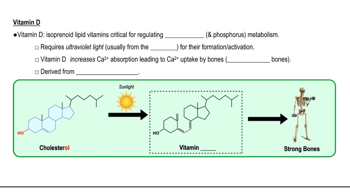
 01:50
01:50
 1:00
1:00Mark the following statements as true or false. If a statement is false, correct it to make a true statement.
c. The greater the load the bone must carry, the more bone that is resorbed by osteoclasts.
Mark the following statements as true or false. If a statement is false, correct it to make a true statement.
d. Calcitonin is released in response to an elevated calcium ion concentration in the blood.
Mark the following statements as true or false. If a statement is false, correct it to make a true statement.
e. Parathyroid hormone increases the blood calcium ion concentration by increasing the activity of osteoblasts.
Which of the following influences bone remodeling?
a. Vitamins such as vitamins D, C, and K
b. Intake of calcium ions
c. Hormones such as estrogen and testosterone
d. All of the above
Correctly order the following steps of fracture repair, placing a 1 by the first step, a 2 by the second step, and so on.
Osteoblasts in the periosteum lay down a bone callus of primary bone.
Damaged blood vessels bleed and fill the gap between the bone fragments with a hematoma.
The bone callus is remodeled and replaced with secondary bone.
Fibroblasts, chondroblasts, and blood vessels enter the clot, and the soft callus begins to bridge the gap between bone fragments.