Textbook Question
What two cell populations make up nervous tissue? What is the function of each?
36
views

 Martini, Nath, Bartholomew 11th EditionCh. 4 The Tissue Level of OrganizationProblem 15
 Verified step by step guidance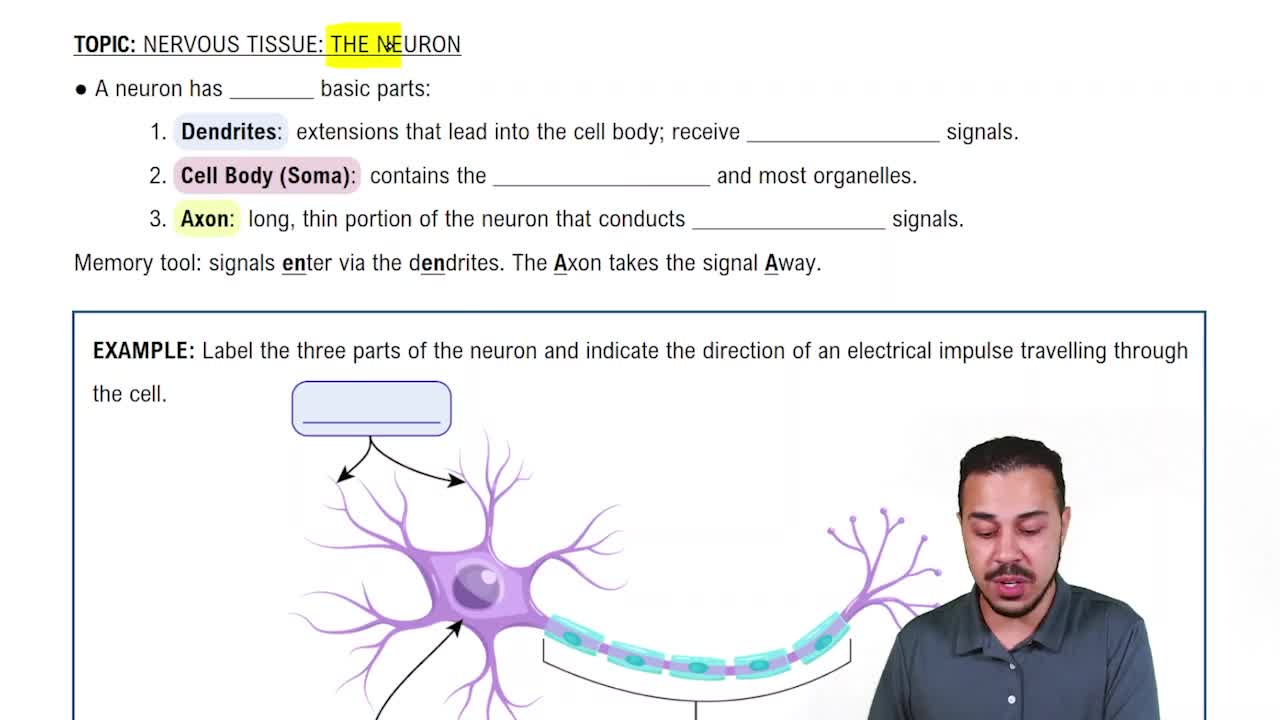
 04:20
04:20 04:20
04:20 00:36
00:36What two cell populations make up nervous tissue? What is the function of each?
The type of cartilage growth characterized by adding new layers of cartilage to the surface is
(a) Interstitial growth
(b) Appositional growth
(c) Intramembranous growth
(d) Longitudinal growth.
List three basic components of connective tissues.
Functions of connective tissue include
(a) Establishing a structural framework for the body
(b) Storing energy reserves
(c) Providing protection for delicate organs
(d) All of these
(e) a and c only.
The three major types of cartilage in the body are
(a) Collagen, reticular, and elastic
(b) Areolar, adipose, and reticular
(c) Hyaline, elastic, and fibrous
(d) Tendons, reticular, and elastic
What are the four essential functions of epithelial tissue?