Hemophilia A, a condition in which blood does not clot properly, is a recessive trait located on the X chromosome (Xʰ). Suppose that a woman who is heterozygous for this trait (XXʰ) has children with a normal male (XY). What is the probability that the couple will have daughters with hemophilia? What is the probability that the couple will have sons with hemophilia?
Verified step by step guidance
1
Identify the genotypes of the parents: The woman is heterozygous for hemophilia A, so her genotype is X X\^h (one normal X chromosome and one X chromosome with the hemophilia allele). The man is normal, so his genotype is X Y.
Determine the possible gametes each parent can produce: The woman can produce eggs carrying either X or X\^h. The man can produce sperm carrying either X or Y.
Set up a Punnett square to find all possible combinations of the offspring's sex chromosomes: Combine the woman's gametes (X and X\^h) with the man's gametes (X and Y) to get the genotypes of daughters and sons.
Analyze the daughters' genotypes: Daughters receive one X chromosome from each parent. The possible daughter genotypes are X X (normal) and X\^h X (carrier). Since hemophilia is recessive and X-linked, daughters must have two X\^h alleles (X\^h X\^h) to express the disease. Determine the probability of this genotype from the Punnett square.
Analyze the sons' genotypes: Sons receive the X chromosome from the mother and the Y chromosome from the father. The possible son genotypes are X Y (normal) and X\^h Y (hemophiliac). Since males have only one X chromosome, the presence of X\^h means the son will have hemophilia. Determine the probability of this genotype from the Punnett square.
Verified video answer for a similar problem:
This video solution was recommended by our tutors as helpful for the problem above
Play a video:
Was this helpful?
Key Concepts
Here are the essential concepts you must grasp in order to answer the question correctly.
X-linked Recessive Inheritance
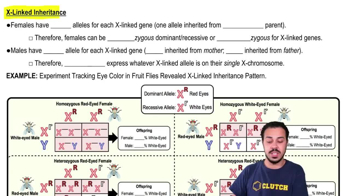
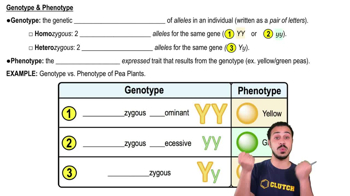
X-linked recessive traits are caused by genes located on the X chromosome. Males (XY) are more likely to express the trait because they have only one X chromosome, while females (XX) must inherit two copies of the recessive allele to express the trait. Females with one affected X are carriers but usually do not show symptoms.
Understanding the parents' genotypes is essential: the mother is heterozygous (XXʰ), meaning she carries one normal and one affected X chromosome, while the father is normal (XY). This determines the possible combinations of sex chromosomes and alleles their children can inherit, influencing the probability of affected offspring.
Calculating the probability involves combining the inheritance patterns of sex chromosomes and the recessive allele. Daughters inherit one X from each parent, while sons inherit the X from the mother and Y from the father. This affects the likelihood of daughters or sons having hemophilia based on the mother's carrier status.