Describe the changes that occur in kidney and bladder anatomy and physiology in old age.
Verified step by step guidance
1
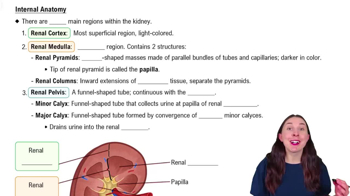
Step 1: Begin by identifying the key anatomical changes in the kidneys that occur with aging. These include a decrease in kidney size and weight, as well as a reduction in the number of functional nephrons, which are the filtering units of the kidney.
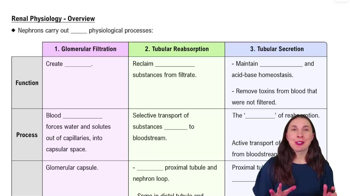
Step 2: Explain the physiological changes in kidney function, such as a decline in the glomerular filtration rate (GFR), which reduces the kidney's ability to filter blood efficiently. This can be described by noting that GFR decreases approximately 1% per year after the age of 40.
Step 3: Discuss changes in renal blood flow, which typically decreases with age, contributing to reduced kidney function. This affects the kidney's ability to concentrate urine and maintain electrolyte balance.
Step 4: Describe the anatomical changes in the bladder, including decreased bladder capacity and increased bladder wall thickness due to muscle changes. These changes can lead to symptoms such as increased frequency and urgency of urination.
Step 5: Outline the physiological changes in bladder function, such as decreased detrusor muscle contractility and increased residual urine volume after voiding, which can contribute to incomplete bladder emptying and increased risk of urinary tract infections.
Verified video answer for a similar problem:
This video solution was recommended by our tutors as helpful for the problem above
Video duration:
5m
Play a video:
Was this helpful?
Key Concepts
Here are the essential concepts you must grasp in order to answer the question correctly.
Age-related Structural Changes in the Kidney
With aging, the kidneys undergo structural changes such as a reduction in renal mass, glomerulosclerosis, and tubular atrophy. These changes lead to decreased nephron number and altered renal blood flow, impacting the kidney's ability to filter blood efficiently.
Physiologically, aging kidneys show reduced glomerular filtration rate (GFR), impaired sodium and water balance, and decreased ability to concentrate urine. These functional declines increase the risk of fluid imbalance and affect drug clearance.
The bladder experiences decreased capacity, reduced detrusor muscle contractility, and increased residual urine volume with age. These changes contribute to symptoms like urinary frequency, urgency, and increased risk of urinary tract infections.