Cardiovascular function is regulated by all of the following except: (a) Local factors (b) Neural factors (c) Endocrine factors (d) Venous return (e) Conscious control
Verified step by step guidance
1
Step 1: Understand the role of each factor in cardiovascular function regulation. Local factors include substances released by tissues that affect blood vessel diameter and blood flow.
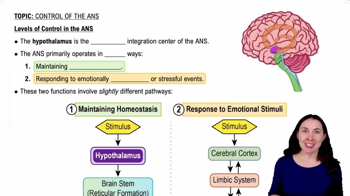
Step 2: Recognize that neural factors involve the autonomic nervous system, which adjusts heart rate and vessel constriction to regulate blood pressure and flow.
Step 3: Know that endocrine factors refer to hormones like adrenaline and angiotensin that influence cardiovascular activity by altering heart function and vessel tone.
Step 4: Identify venous return as the volume of blood returning to the heart, which affects cardiac output but is more a consequence of cardiovascular function rather than a regulatory mechanism.
Step 5: Consider conscious control, which generally does not regulate cardiovascular function directly, as most cardiovascular regulation is involuntary and controlled by autonomic and local mechanisms.
Verified video answer for a similar problem:
This video solution was recommended by our tutors as helpful for the problem above
Play a video:
Was this helpful?
Key Concepts
Here are the essential concepts you must grasp in order to answer the question correctly.
Regulation of Cardiovascular Function
Cardiovascular function is controlled by mechanisms that adjust heart rate, blood vessel diameter, and blood flow to meet the body's needs. These include local factors (like tissue metabolites), neural inputs (autonomic nervous system), and endocrine signals (hormones). Understanding these helps identify which factors actively regulate cardiovascular activity.
Venous return is the volume of blood returning to the heart via the veins. While it influences cardiac output by affecting stroke volume through the Frank-Starling mechanism, it is a physical parameter rather than a regulatory factor that controls cardiovascular function directly.
Conscious control refers to voluntary actions governed by the cerebral cortex. Unlike autonomic regulation, cardiovascular function is largely involuntary and not subject to direct conscious control, making this an exception in the mechanisms regulating cardiovascular activity.