The reactivity of an atom arises from
a. the average distance of the outermost electron shell from the nucleus.
b. the existence of unpaired electrons in the valence shell.
c. the sum of the potential energies of all the electron shells.
d. the potential energy of the valence shell.
Verified step by step guidance
1
Identify the key concept: Reactivity of an atom is primarily determined by its electron configuration, particularly the valence shell.
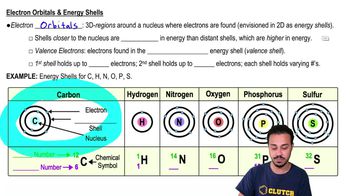
Understand that the valence shell is the outermost electron shell of an atom, and its configuration determines how an atom interacts with other atoms.
Consider the role of unpaired electrons: Atoms with unpaired electrons in their valence shell are more likely to react with other atoms to achieve a stable electron configuration.
Evaluate each option: (a) focuses on distance, (b) on unpaired electrons, (c) on total potential energy, and (d) on potential energy of the valence shell.
Determine which option best explains reactivity: The presence of unpaired electrons in the valence shell (option b) is a key factor in an atom's reactivity, as atoms tend to form bonds to pair these electrons and achieve stability.
Verified video answer for a similar problem:
This video solution was recommended by our tutors as helpful for the problem above.
Video duration:
1m
Play a video:
0 Comments
Key Concepts
Here are the essential concepts you must grasp in order to answer the question correctly.
Valence Electrons
Valence electrons are the electrons located in the outermost shell of an atom. They play a crucial role in chemical bonding and reactivity, as they are the electrons that can be gained, lost, or shared during chemical reactions. The number of unpaired valence electrons directly influences an atom's ability to form bonds with other atoms.
Electron shells are the regions around an atom's nucleus where electrons are likely to be found. Each shell can hold a specific number of electrons, and the arrangement of these shells determines the atom's overall energy level and stability. The distance of the outermost shell from the nucleus affects the atom's reactivity, as it influences the attraction between the nucleus and the valence electrons.
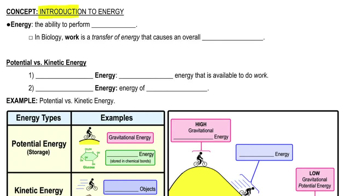
Potential energy in atoms refers to the energy stored in the arrangement of electrons around the nucleus. This energy is influenced by the distance of electrons from the nucleus and the interactions between electrons. In terms of reactivity, the potential energy of the valence shell is particularly important, as it determines how easily an atom can lose or gain electrons during chemical reactions.

 1:28 minutes
 Verified step by step guidance
 07:41
07:41