Vinblastine is a standard chemotherapeutic drug used to treat cancer. Because it interferes with the assembly of microtubules, its effectiveness must be related to
a. disruption of mitotic spindle formation.
b. suppression of cyclin production.
c. myosin denaturation and inhibition of cleavage furrow formation.
d.inhibition of DNA synthesis.
Verified step by step guidance
1
Identify the primary function of vinblastine, which is to interfere with the assembly of microtubules.
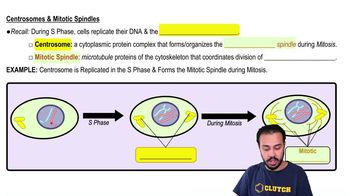
Understand that microtubules are crucial components of the mitotic spindle, which is essential for chromosome separation during cell division.
Recognize that disrupting microtubule assembly would directly affect the formation and function of the mitotic spindle.
Consider the options provided: (a) disruption of mitotic spindle formation, (b) suppression of cyclin production, (c) myosin denaturation and inhibition of cleavage furrow formation, (d) inhibition of DNA synthesis.
Determine which option directly relates to the role of microtubules in cell division, focusing on the mitotic spindle's role in this process.
Verified video answer for a similar problem:
This video solution was recommended by our tutors as helpful for the problem above.
Video duration:
35s
Play a video:
0 Comments
Key Concepts
Here are the essential concepts you must grasp in order to answer the question correctly.
Microtubules and Mitotic Spindle
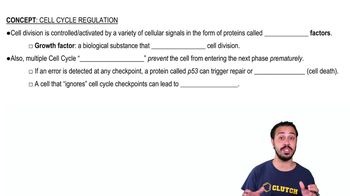
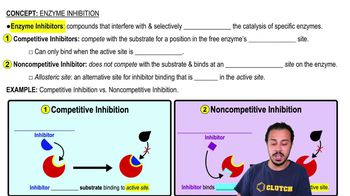
Microtubules are dynamic structures that play a crucial role in cell division by forming the mitotic spindle, which separates chromosomes during mitosis. Vinblastine disrupts the assembly of these microtubules, leading to improper spindle formation and ultimately preventing the successful division of cancer cells.
Cyclins are proteins that regulate the cell cycle by activating cyclin-dependent kinases (CDKs). While cyclin production is essential for cell cycle progression, vinblastine's primary mechanism of action is not through cyclin suppression but rather through its effect on microtubules, making this option less relevant in the context of its effectiveness.
Inhibition of DNA synthesis refers to the prevention of DNA replication, which is critical for cell division. However, vinblastine does not directly inhibit DNA synthesis; instead, it targets microtubule dynamics, which is a distinct mechanism of action that affects the mitotic process rather than the genetic material itself.

 0:35 minutes
 Verified step by step guidance
 04:02
04:02