Mark the following statements as true or false. If a statement is false, correct it to make a true statement. Cancer cells are destroyed by NK cells, TC cells, and macrophages.
Verified step by step guidance
1
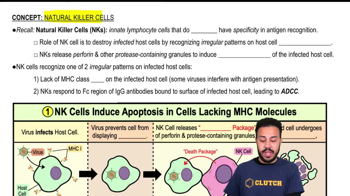
Step 1: Understand the role of NK cells (Natural Killer cells), TC cells (Cytotoxic T cells), and macrophages in the immune system. NK cells are part of the innate immune system and can destroy cancer cells without prior activation. TC cells are part of the adaptive immune system and target cancer cells specifically after recognizing antigens. Macrophages can engulf and destroy cancer cells through phagocytosis and also release cytokines to recruit other immune cells.
Step 2: Evaluate the statement provided. The statement claims that cancer cells are destroyed by NK cells, TC cells, and macrophages. This is generally true, as all three types of cells play roles in targeting and eliminating cancer cells.
Step 3: Consider any exceptions or nuances. While these immune cells are capable of destroying cancer cells, some cancer cells can evade immune detection through mechanisms like downregulating antigen presentation or secreting immunosuppressive factors.
Step 4: If the statement is true, confirm it. If false, correct it. In this case, the statement is true, but it could be expanded for clarity by mentioning that cancer cells may evade immune destruction in certain circumstances.
Step 5: Finalize the understanding by noting that the immune system's ability to destroy cancer cells is a complex process involving multiple cell types and signaling pathways, and cancer cells can sometimes develop resistance to immune attacks.
Verified video answer for a similar problem:
This video solution was recommended by our tutors as helpful for the problem above
Play a video:
Was this helpful?
Key Concepts
Here are the essential concepts you must grasp in order to answer the question correctly.
Natural Killer (NK) Cells
Natural Killer (NK) cells are a type of lymphocyte in the immune system that play a crucial role in the body's defense against tumors and virally infected cells. They can recognize and kill these cells without prior sensitization, making them essential for early immune responses. NK cells release cytotoxic granules that induce apoptosis in target cells, contributing to the elimination of cancerous cells.
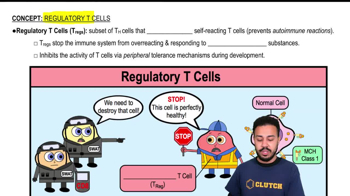
T cells are a subset of lymphocytes that are vital for the adaptive immune response. They are divided into various types, including cytotoxic T cells (T<sub>C</sub> cells), which specifically target and destroy infected or cancerous cells. T cells require activation through antigen presentation and play a significant role in recognizing and responding to cancer cells, enhancing the immune response against tumors.
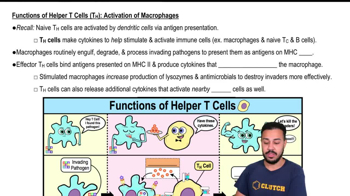
Macrophages are large phagocytic cells that are part of the innate immune system. They play a dual role in immune defense by engulfing pathogens and dead cells, as well as presenting antigens to T cells to initiate an adaptive immune response. In the context of cancer, macrophages can either promote tumor growth or help eliminate cancer cells, depending on their activation state and the tumor microenvironment.