
Mark the following statements as true or false. If a statement is false, correct it to make a true statement. The tidal volume is the amount of air left in the lungs after maximal expiration.
Verified step by step guidance
1
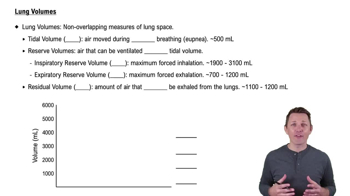
Step 1: Understand the term 'tidal volume'. Tidal volume refers to the amount of air inhaled or exhaled during a normal, resting breath. It is not related to the air left in the lungs after maximal expiration.
Step 2: Identify the term that describes the air left in the lungs after maximal expiration. This is called the 'residual volume', not tidal volume.
Step 3: Evaluate the given statement. The statement is false because it incorrectly defines tidal volume as the air left in the lungs after maximal expiration.
Step 4: Correct the false statement. The corrected statement should read: 'The tidal volume is the amount of air inhaled or exhaled during a normal, resting breath.'
Step 5: Review the corrected statement and ensure it aligns with the proper definitions of tidal volume and residual volume in respiratory physiology.
Verified video answer for a similar problem:
This video solution was recommended by our tutors as helpful for the problem above
Play a video:
Was this helpful?
Key Concepts
Here are the essential concepts you must grasp in order to answer the question correctly.
Tidal Volume
Tidal volume refers to the amount of air that is inhaled or exhaled during normal breathing. It is a key component of respiratory physiology and is typically measured in milliliters. Understanding tidal volume is essential for assessing lung function and overall respiratory health.
Lung volumes are measurements that describe the different capacities of the lungs, including tidal volume, residual volume, and vital capacity. Each volume plays a role in understanding how the lungs function during various activities, such as rest and exercise. Knowing these volumes helps in diagnosing and managing respiratory conditions.
Residual volume is the amount of air that remains in the lungs after a maximal exhalation. It prevents the lungs from collapsing and ensures that gas exchange can continue even between breaths. This concept is crucial for understanding lung mechanics and the overall respiratory system.