
Which of the following statements is/are true regarding ATP? a. It is the body's primary source of chemical energy. b. Its production is the main reason humans breathe oxygen. c. It is produced using the energy from the oxidation of molecular fuels like glucose. d. All of the above statements are true.
Verified step by step guidance
1
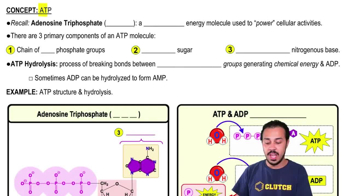
Step 1: Understand the role of ATP (adenosine triphosphate) in the body. ATP is the primary molecule used by cells to store and transfer energy for various biological processes, making it the body's primary source of chemical energy.
Step 2: Recognize the connection between ATP production and oxygen. Humans breathe oxygen because it is essential for cellular respiration, specifically in the electron transport chain, where oxygen acts as the final electron acceptor to produce ATP efficiently.
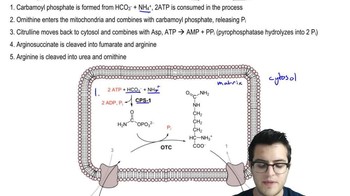
Step 3: Analyze how ATP is produced. ATP is synthesized during cellular respiration, which involves the oxidation of molecular fuels like glucose. This process includes glycolysis, the citric acid cycle, and oxidative phosphorylation.
Step 4: Evaluate the statements provided in the question. Each statement should be assessed based on the information above to determine its accuracy.
Step 5: Conclude that if all the individual statements (a, b, and c) are true, then the final option (d) stating 'All of the above statements are true' would also be correct.
Verified video answer for a similar problem:
This video solution was recommended by our tutors as helpful for the problem above
Play a video:
Was this helpful?
Key Concepts
Here are the essential concepts you must grasp in order to answer the question correctly.
ATP as Energy Currency
Adenosine triphosphate (ATP) is often referred to as the energy currency of the cell. It stores and transports chemical energy within cells, enabling various biological processes. When ATP is hydrolyzed, it releases energy that can be used for cellular activities, making it essential for metabolism and muscle contraction.
Oxygen plays a critical role in cellular respiration, particularly in aerobic organisms. It acts as the final electron acceptor in the electron transport chain, allowing for the efficient production of ATP from glucose and other substrates. This process is vital for generating the energy required for sustaining life.
The oxidation of molecular fuels, such as glucose, involves the breakdown of these compounds to release energy. This energy is harnessed during cellular respiration to synthesize ATP. The process includes glycolysis, the Krebs cycle, and oxidative phosphorylation, highlighting the interconnectedness of metabolic pathways in energy production.