Which statement about the daughter cells following mitosis and cytokinesis is correct?
a. They are genetically different from each other and from the parent cell.
b. They are genetically identical to each other and to the parent cell.
c. They are genetically identical to each other but different from the parent cell.
d. Only one of the two daughter cells is genetically identical to the parent cell.
Verified step by step guidance
1
Understand the process of mitosis: Mitosis is a type of cell division that results in two daughter cells each having the same number and kind of chromosomes as the parent nucleus, typical of ordinary tissue growth.
Consider the genetic material: During mitosis, the DNA is replicated so that each daughter cell receives an exact copy of the parent cell's DNA.
Analyze the role of cytokinesis: Cytokinesis is the process that divides the cytoplasm of a parental cell into two daughter cells, completing the cell division process.
Evaluate the genetic identity: Since mitosis and cytokinesis result in the distribution of identical genetic material to each daughter cell, the daughter cells are genetically identical to each other and to the parent cell.
Select the correct statement: Based on the understanding of mitosis and cytokinesis, identify the statement that correctly describes the genetic identity of the daughter cells.
Verified video answer for a similar problem:
This video solution was recommended by our tutors as helpful for the problem above.
Video duration:
2m
Play a video:
0 Comments
Key Concepts
Here are the essential concepts you must grasp in order to answer the question correctly.
Mitosis
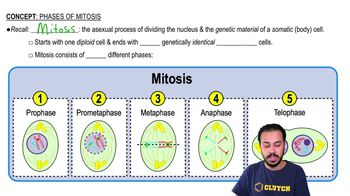
Mitosis is the process of cell division that results in two genetically identical daughter cells from a single parent cell. It involves several stages: prophase, metaphase, anaphase, and telophase, where the chromosomes are duplicated and evenly distributed to ensure that each daughter cell receives an exact copy of the parent cell's genetic material.
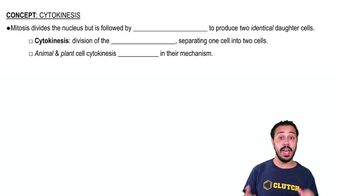
Cytokinesis is the final step of cell division, occurring after mitosis, where the cytoplasm of a parental cell divides to form two separate daughter cells. This process ensures that each daughter cell has its own distinct cell membrane and organelles, completing the cell division cycle and allowing for independent cellular function.
Genetic identity refers to the genetic makeup of an organism or cell. In the context of mitosis, the daughter cells are genetically identical to each other and to the parent cell, as the DNA is replicated and distributed without alteration. This concept is crucial for understanding the outcomes of mitosis and the implications for growth, repair, and asexual reproduction.

 2:42 minutes
 Verified step by step guidance
 03:21
03:21