A shortage of phosphorus in the soil would make it especially difficult for a plant to manufacture
a. DNA.
b. proteins.
c. cellulose.
d. sucrose.
Verified step by step guidance
1
Step 1: Understand the role of phosphorus in plants. Phosphorus is a vital nutrient for plants, playing a key role in various biological processes. It is a component of ATP (adenosine triphosphate), which is a molecule that stores and transfers energy within cells.
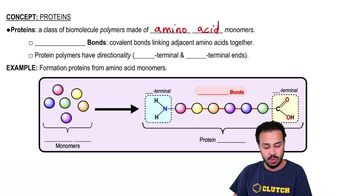
Step 2: Identify the components of each option. DNA is composed of nucleotides, proteins are composed of amino acids, cellulose is a polysaccharide composed of glucose units, and sucrose is a disaccharide composed of glucose and fructose.
Step 3: Determine which of these components require phosphorus. DNA and ATP require phosphorus as it is a component of their structure. Proteins, cellulose, and sucrose do not contain phosphorus in their structure.
Step 4: Based on the information from steps 2 and 3, a shortage of phosphorus in the soil would make it especially difficult for a plant to manufacture DNA, as it is a component of its structure.
Verified video answer for a similar problem:
This video solution was recommended by our tutors as helpful for the problem above.
Video duration:
1m
Play a video:
0 Comments
Key Concepts
Here are the essential concepts you must grasp in order to answer the question correctly.
Role of Phosphorus in Plants
Phosphorus is a vital macronutrient for plants, playing a crucial role in energy transfer, photosynthesis, and the synthesis of nucleic acids. It is a key component of ATP (adenosine triphosphate), which is essential for energy storage and transfer within plant cells. A deficiency in phosphorus can severely hinder a plant's growth and development.
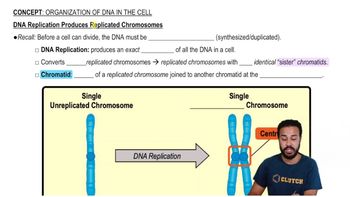
DNA (deoxyribonucleic acid) is the hereditary material in all living organisms, and its synthesis requires nucleotides, which contain phosphorus in their structure. Phosphorus is integral to the backbone of DNA, linking nucleotides together. Without sufficient phosphorus, a plant cannot effectively produce DNA, impacting its ability to grow and reproduce.
Proteins are essential macromolecules made up of amino acids, and their synthesis is a complex process that requires various nutrients, including phosphorus. While phosphorus is not a direct component of proteins, it is involved in the synthesis of nucleotides and ATP, which are necessary for the translation of genetic information into proteins. A phosphorus shortage can disrupt this process, affecting overall plant health.

 1:19 minutes
 Verified step by step guidance
 03:20
03:20