Your friend Jillian, who knows little about science, is reading a magazine article about a patient who had an 'aneurysm at the base of his brain that suddenly grew much larger.' The surgeons' first goal was to 'keep it from rupturing,' and the second goal was to 'relieve the pressure on the brain stem and cranial nerves.' The surgeons were able to 'replace the aneurysm with a section of plastic tubing,' so the patient recovered. Jillian asks you what all this means. Explain.
Verified step by step guidance
1
Step 1: Explain what an aneurysm is — it is a localized, abnormal dilation or ballooning of a blood vessel wall, often caused by weakness in the vessel. In the brain, this can be dangerous because the vessel wall can rupture, leading to bleeding in the brain.
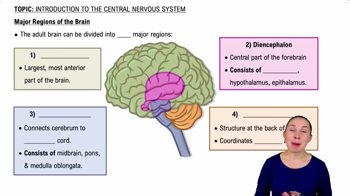
Step 2: Describe why an aneurysm at the base of the brain is concerning — this area contains critical structures like the brain stem and cranial nerves, which control vital functions such as breathing, heart rate, and movement. A growing aneurysm can press on these structures, causing serious problems.
Step 3: Clarify the surgeons' first goal — to prevent the aneurysm from rupturing, which would cause bleeding (hemorrhage) and potentially life-threatening damage. This is often done by isolating the aneurysm from blood flow.
Step 4: Explain the second goal — relieving pressure on the brain stem and cranial nerves. The enlarged aneurysm can compress these areas, so reducing this pressure helps restore normal function and prevent neurological damage.
Step 5: Describe the surgical solution — replacing the aneurysm with a section of plastic tubing (a vascular graft) means the damaged part of the blood vessel is removed and replaced with a synthetic tube that allows blood to flow normally without the risk of rupture or pressure on nearby brain structures.
Verified video answer for a similar problem:
This video solution was recommended by our tutors as helpful for the problem above
Video duration:
2m
Play a video:
Was this helpful?
Key Concepts
Here are the essential concepts you must grasp in order to answer the question correctly.
Brain Aneurysm
A brain aneurysm is a weak or bulging spot in a blood vessel in the brain that can grow larger and risk bursting. If it ruptures, it can cause serious bleeding and damage. Understanding what an aneurysm is helps explain why surgeons want to prevent it from breaking.
Surgery for brain aneurysms often involves removing or isolating the damaged vessel and replacing it with a synthetic tube or clip. This prevents rupture and restores normal blood flow, reducing the risk of bleeding and further brain injury.
An enlarged aneurysm can press on the brain stem and cranial nerves, causing symptoms like pain or nerve dysfunction. Relieving this pressure is crucial to protect vital brain functions and improve recovery after surgery.