8. Centripetal Forces & Gravitation
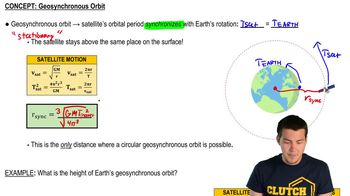
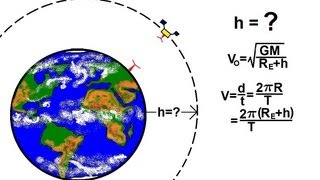
Geosynchronous Orbits
8. Centripetal Forces & Gravitation
Geosynchronous Orbits
 04:45
04:45

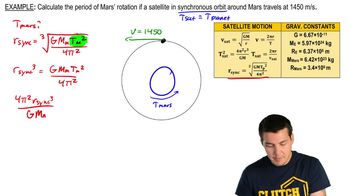
Additional 4 creators.
Learn with other creators
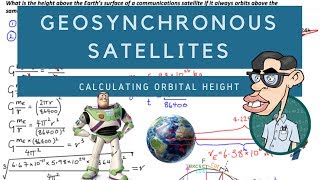

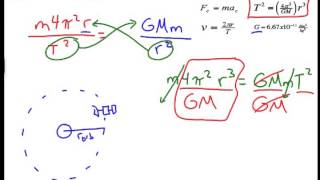






Showing 7 of 7 videos
Practice this topic
- Multiple Choice
You're on a satellite orbiting an unknown planet. The only property of this planet that you know is that days are 18 hours long. Your onboard sensors show that you're orbiting at 16,000 km above the surface, with a velocity of 3 km/s. You look down and notice that you're always above the same point on that planet as you orbit around it.
Calculate the mass of the planet.1322views3rank1comments - Multiple Choice
What is the approximate orbital period of a geosynchronous satellite around ?
209views - Multiple Choice
A satellite of mass kg is placed in a geosynchronous orbit around Earth. What is the weight of the satellite at that altitude? (Assume Earth's mass kg, gravitational constant mkg, and Earth's radius m.)
234views - Multiple Choice
Which of the following is true about geostationary satellites?
190views