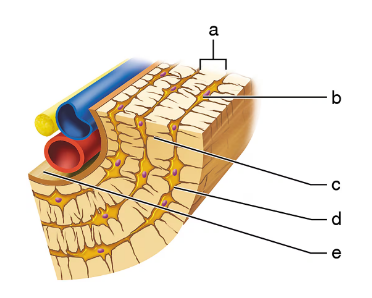
Match the appropriate name with the structure in the figure. 4. Canaliculus
Verified step by step guidance
1
Understand the term 'canaliculus': A canaliculus is a small channel or duct in the body, often found in bone tissue or liver tissue. In bones, canaliculi connect lacunae, allowing communication and nutrient exchange between osteocytes. In the liver, canaliculi are involved in bile transport.
Identify the context: Determine whether the question is referring to canaliculi in bone tissue or liver tissue. This will help narrow down the relevant choices.
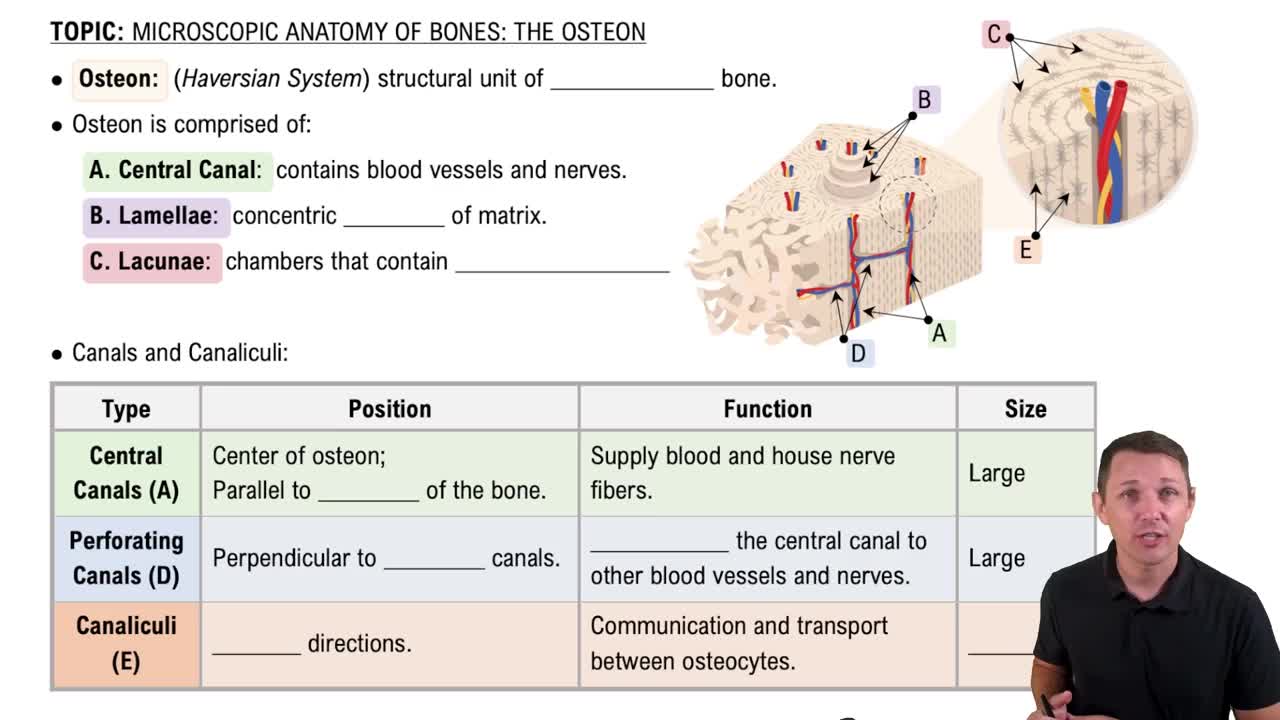
Review the anatomy of canaliculi in bone tissue: In compact bone, canaliculi are tiny channels that radiate from the lacunae, connecting osteocytes to each other and to the central canal (Haversian canal). This facilitates nutrient and waste exchange.
Review the anatomy of canaliculi in liver tissue: In the liver, bile canaliculi are small ducts formed by hepatocytes that transport bile to larger bile ducts. They play a role in the excretion of bile, which aids in digestion.
Match the correct choices: Based on the context provided in the question, select the options that accurately describe the structure and function of canaliculi in the relevant tissue type.
Verified video answer for a similar problem:
This video solution was recommended by our tutors as helpful for the problem above
Video duration:
2m
Play a video:
Was this helpful?
Key Concepts
Here are the essential concepts you must grasp in order to answer the question correctly.
Canaliculus
A canaliculus is a small channel or duct within the body, often associated with the transport of substances. In the context of anatomy and physiology, canaliculi are particularly important in bone tissue, where they facilitate communication and nutrient exchange between osteocytes, the bone cells. Understanding canaliculi is essential for grasping how bone maintains its health and responds to mechanical stress.
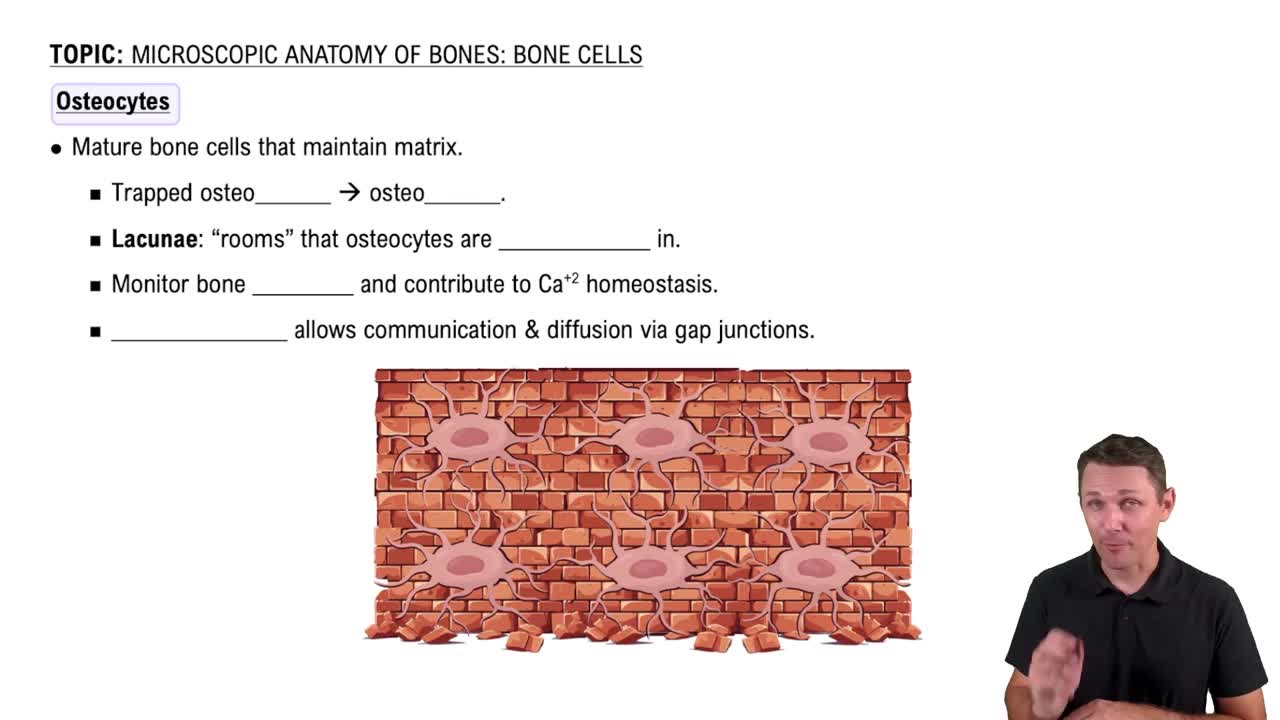
Osteocytes are mature bone cells that originate from osteoblasts, which are responsible for bone formation. These cells reside in small cavities called lacunae and extend their dendritic processes through canaliculi, allowing them to communicate with other osteocytes and cells. This communication is crucial for maintaining bone density and regulating mineral content, making osteocytes a key component in bone homeostasis.
Bone remodeling is a continuous process where old bone tissue is replaced by new bone tissue, involving the coordinated activity of osteoclasts (bone resorbing cells) and osteoblasts (bone forming cells). This process is essential for maintaining bone strength and integrity, adapting to mechanical loads, and repairing micro-damage. Understanding bone remodeling is vital for comprehending how canaliculi and osteocytes contribute to overall bone health.