List the structural features in a prokaryotic cell.
Verified step by step guidance
1
Identify the structural features of a prokaryotic cell, which typically include the cell wall, plasma membrane, cytoplasm, ribosomes, and genetic material (nucleoid).
Note that the provided image is of a eukaryotic cell, as it contains membrane-bound organelles such as the nucleus, mitochondria, and Golgi apparatus.
For a prokaryotic cell, focus on the absence of membrane-bound organelles and the presence of simpler structures.
List the key features of a prokaryotic cell: 1. Cell wall, 2. Plasma membrane, 3. Cytoplasm, 4. Ribosomes, 5. Nucleoid (region containing DNA).
Understand that prokaryotic cells may also have additional structures such as flagella, pili, and plasmids, which are not present in the provided eukaryotic cell image.
Verified video answer for a similar problem:
This video solution was recommended by our tutors as helpful for the problem above.
Video duration:
1m
Play a video:
0 Comments
Key Concepts
Here are the essential concepts you must grasp in order to answer the question correctly.
Prokaryotic Cell Structure
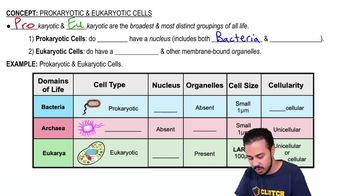
Prokaryotic cells are characterized by their lack of a membrane-bound nucleus and organelles. Instead, their genetic material is located in a region called the nucleoid. They typically have a simpler structure compared to eukaryotic cells, which allows for rapid reproduction and adaptability in various environments.
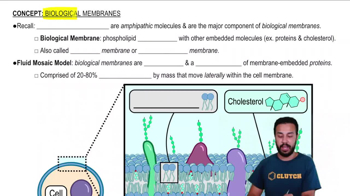
The cell membrane, or plasma membrane, is a crucial structural feature of prokaryotic cells, acting as a barrier that regulates the entry and exit of substances. It is composed of a phospholipid bilayer with embedded proteins, which facilitate transport and communication. This selective permeability is vital for maintaining homeostasis within the cell.
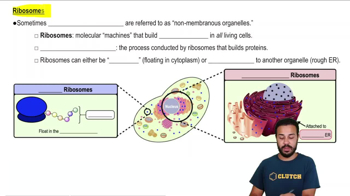
Ribosomes are essential structures found in prokaryotic cells, responsible for protein synthesis. They are composed of ribosomal RNA and proteins, and unlike eukaryotic ribosomes, prokaryotic ribosomes are smaller and float freely in the cytoplasm. Their presence is critical for the cell's ability to produce the proteins necessary for growth and function.

 1:31 minutes
 Verified step by step guidance
 05:54
05:54