Ch. 20 The Lymphatic System and Immunity
Amerman - Human Anatomy & Physiology 2nd Edition
Amerman2nd EditionHuman Anatomy & PhysiologyISBN: 9780136873822Not the one you use?Change textbook
Chapter 20, Problem L2.2

Complement proteins are crucial for stimulating phagocytes to clear immune complexes. Predict what type of hypersensitivity disorder might result from complement deficiencies. Explain what other consequences might arise from a complement deficiency.

Verified step by step guidance
1
Understand the role of complement proteins in the immune system: Complement proteins are part of the innate immune system and help in opsonization (marking pathogens for destruction), recruiting immune cells, and forming membrane attack complexes to destroy pathogens. They also stimulate phagocytes to clear immune complexes, which are clusters of antigens bound to antibodies.
Identify the connection between complement deficiencies and hypersensitivity disorders: Complement deficiencies can impair the clearance of immune complexes, leading to their accumulation in tissues. This accumulation can trigger inflammation and tissue damage, which is characteristic of Type III hypersensitivity disorders (immune complex-mediated hypersensitivity).
Explain the mechanism of Type III hypersensitivity: In Type III hypersensitivity, immune complexes deposit in tissues such as blood vessels, joints, and kidneys. These deposits activate the complement system, leading to inflammation and recruitment of neutrophils, which can cause tissue damage. A deficiency in complement proteins disrupts this process, exacerbating immune complex accumulation and inflammation.
Discuss other consequences of complement deficiencies: Complement deficiencies can lead to increased susceptibility to infections, particularly bacterial infections, because complement proteins are essential for opsonization and the formation of membrane attack complexes. Additionally, complement deficiencies may impair the regulation of immune responses, potentially contributing to autoimmune diseases.
Summarize the importance of complement proteins: Complement proteins are vital for maintaining immune system balance by clearing immune complexes, preventing excessive inflammation, and protecting against infections. A deficiency in these proteins can result in hypersensitivity disorders, increased infection risk, and potential autoimmune complications.

Verified video answer for a similar problem:

This video solution was recommended by our tutors as helpful for the problem above.
Was this helpful?

Key Concepts

Here are the essential concepts you must grasp in order to answer the question correctly.

Complement System

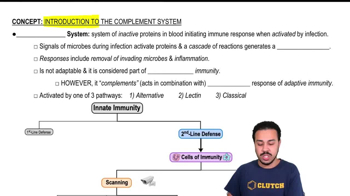
The complement system is a part of the immune system that enhances the ability of antibodies and phagocytic cells to clear pathogens and promote inflammation. It consists of a series of proteins that, when activated, can opsonize pathogens, recruit immune cells, and form membrane attack complexes to lyse cells. Deficiencies in this system can lead to increased susceptibility to infections and impaired clearance of immune complexes.
Recommended video:
4:25
Complement System

Hypersensitivity Disorders

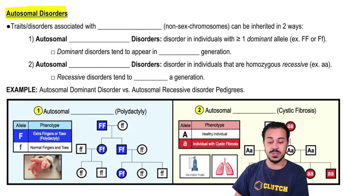
Hypersensitivity disorders are exaggerated immune responses that can cause tissue damage and disease. They are classified into four types: Type I (immediate), Type II (cytotoxic), Type III (immune complex-mediated), and Type IV (delayed-type). A deficiency in complement proteins can lead to Type III hypersensitivity, where immune complexes accumulate and cause inflammation and tissue damage due to inadequate clearance.
Recommended video:
05:21
Autosomal Disorders

Phagocytosis

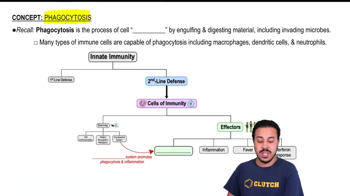
Phagocytosis is the process by which certain immune cells, such as macrophages and neutrophils, engulf and digest pathogens and debris. This process is crucial for maintaining tissue homeostasis and initiating immune responses. Complement proteins enhance phagocytosis by opsonizing pathogens, making them more recognizable to phagocytes. A deficiency in complement can impair this process, leading to chronic infections and autoimmune conditions.
Recommended video:
2:19
Phagocytosis