Within a cell, the amount of protein made using a given mRNA molecule depends partly on
a. the degree of DNA methylation.
b. the rate at which the mRNA is degraded.
c. the number of introns present in the mRNA.
d. the types of ribosomes present in the cytoplasm.
Verified step by step guidance
1
Identify the role of mRNA in protein synthesis: mRNA serves as a template for translating genetic information into proteins.
Consider the factors that influence protein synthesis from mRNA: stability and availability of mRNA are crucial for determining how much protein is produced.
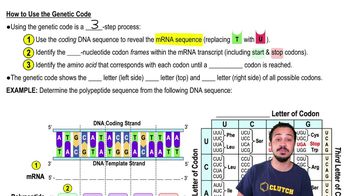
Evaluate each option: a) DNA methylation affects gene expression at the transcriptional level, not directly at the mRNA level. b) The rate of mRNA degradation directly impacts how long mRNA is available for translation, thus affecting protein production. c) Introns are non-coding regions removed during mRNA processing, so their presence in mature mRNA is not relevant. d) Ribosome types can influence translation efficiency but are not directly related to mRNA stability.
Focus on the option that directly affects mRNA availability: The rate of mRNA degradation determines how long the mRNA can be used for protein synthesis.
Conclude that the correct factor influencing protein production from mRNA is the rate at which the mRNA is degraded.
Verified video answer for a similar problem:
This video solution was recommended by our tutors as helpful for the problem above.
Video duration:
1m
Play a video:
0 Comments
Key Concepts
Here are the essential concepts you must grasp in order to answer the question correctly.
mRNA Degradation
mRNA degradation refers to the process by which messenger RNA molecules are broken down in the cell. This process is crucial because the stability and lifespan of mRNA directly influence how much protein can be synthesized. If mRNA is rapidly degraded, it will result in lower protein production, while stable mRNA can lead to higher levels of protein synthesis.
DNA methylation is a biochemical process involving the addition of a methyl group to the DNA molecule, typically at cytosine bases. This modification can affect gene expression by silencing genes or altering their transcriptional activity. While it plays a role in regulating gene expression, its direct impact on the amount of protein produced from a specific mRNA is less immediate compared to mRNA degradation.
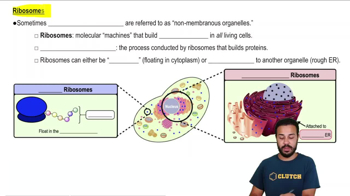
Ribosomes are cellular structures that facilitate the translation of mRNA into proteins. The types of ribosomes present in the cytoplasm can influence the efficiency and rate of protein synthesis. Different ribosomal subunits may have varying affinities for specific mRNAs, affecting how effectively the genetic code is translated into functional proteins.

 1:10 minutes
 Verified step by step guidance
 11:39
11:39