Cell A has half as much DNA as cells B, C, and D in a mitotically active tissue. Cell A is most likely in
a. G1.
b. G2.
c. prophase.
d. metaphase.
Verified step by step guidance
1
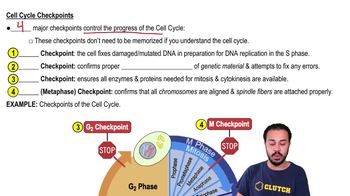
Step 1: Understand the cell cycle. The cell cycle consists of interphase (G1, S, and G2 phases) and the mitotic phase (M phase). During the G1 phase, the cell grows and prepares for DNA replication. In the S phase, DNA replication occurs, doubling the amount of DNA in the cell. During the G2 phase, the cell continues to grow and prepares for mitosis. In the M phase, the cell divides into two daughter cells, each with the same amount of DNA as the original cell.
Step 2: Analyze the given information. Cell A has half as much DNA as cells B, C, and D. This suggests that Cell A has not yet undergone DNA replication, which occurs in the S phase.
Step 3: Compare the options with the given information. The G1 phase is before DNA replication, so the cell would have half the amount of DNA compared to after replication. The G2 phase, prophase, and metaphase are all after DNA replication, so the cell would have twice the amount of DNA.
Step 4: Based on the analysis, Cell A is most likely in the G1 phase of the cell cycle because it has half as much DNA as the other cells, indicating that it has not yet undergone DNA replication.
Verified video answer for a similar problem:
This video solution was recommended by our tutors as helpful for the problem above.
Video duration:
1m
Play a video:
0 Comments
Key Concepts
Here are the essential concepts you must grasp in order to answer the question correctly.
Cell Cycle Stages
The cell cycle consists of several stages, including G1, S, G2, and M phases. During G1, cells grow and prepare for DNA replication, while in the S phase, DNA is replicated, resulting in cells with double the DNA content. G2 is a preparatory phase for mitosis, and M phase includes mitosis and cytokinesis. Understanding these stages is crucial for determining the DNA content of cells.
DNA content varies throughout the cell cycle. Cells in G1 have a haploid amount of DNA, while cells in the S phase have double the DNA due to replication. By G2, cells still have double the DNA, and during mitosis (M phase), the DNA is organized into chromosomes. Recognizing these changes helps identify the stage of a cell based on its DNA content.
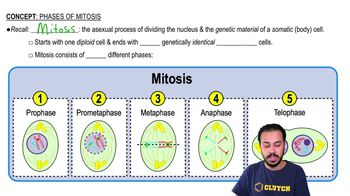
Mitosis is the process of cell division that results in two genetically identical daughter cells. It consists of several phases: prophase, metaphase, anaphase, and telophase. During prophase, chromatin condenses into visible chromosomes, and during metaphase, chromosomes align at the cell's equator. Understanding these phases is essential for determining the state of a cell in mitosis and its corresponding DNA content.

 1:01 minutes
 Verified step by step guidance
 03:31
03:31