
The major extensor of the elbow is the (a) Triceps brachii (b) Biceps brachii (c) Deltoid (d) Subscapularis
Verified step by step guidance
1
Step 1: Understand the function of each muscle listed in the options. The major extensor of the elbow is the muscle primarily responsible for straightening the arm at the elbow joint.
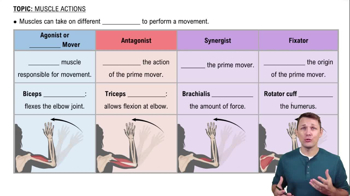
Step 2: Recall that the triceps brachii is located on the posterior side of the upper arm and is known for extending the forearm at the elbow.
Step 3: Recognize that the biceps brachii primarily functions to flex the elbow and supinate the forearm, so it is not an extensor.
Step 4: Note that the deltoid is mainly involved in shoulder abduction and movement, not elbow extension.
Step 5: Understand that the subscapularis is part of the rotator cuff muscles and functions in medial rotation of the humerus, not elbow extension.
Verified video answer for a similar problem:
This video solution was recommended by our tutors as helpful for the problem above
Video duration:
2m
Play a video:
Was this helpful?
Key Concepts
Here are the essential concepts you must grasp in order to answer the question correctly.
Elbow Joint Anatomy
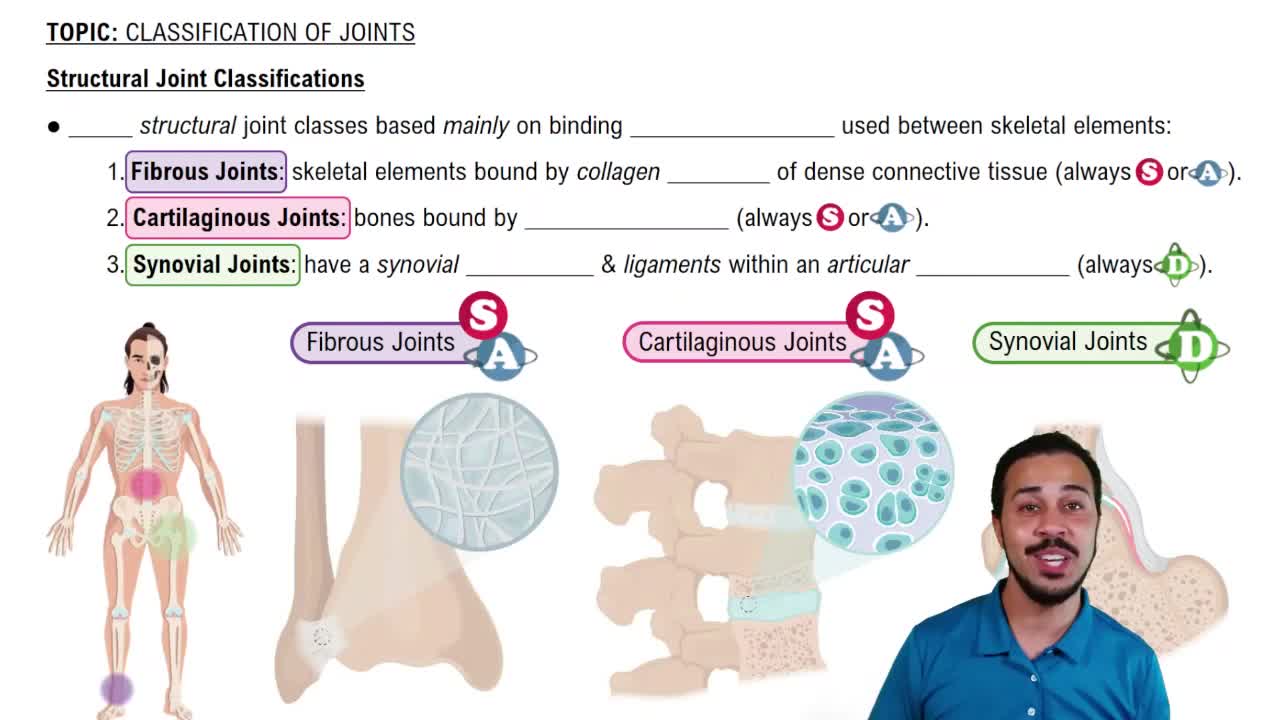
The elbow joint is a hinge joint formed by the humerus, radius, and ulna bones. It allows flexion and extension movements, primarily controlled by muscles located in the upper arm. Understanding the joint's structure helps identify which muscles act as flexors or extensors.
The primary muscle responsible for extending the elbow is the triceps brachii. It is located at the back of the upper arm and contracts to straighten the arm by extending the forearm at the elbow joint.
The biceps brachii mainly flexes the elbow, the deltoid abducts the shoulder, and the subscapularis medially rotates the shoulder. Recognizing these functions helps differentiate which muscle is the major extensor of the elbow.