Sites of hematopoiesis include all but a. Red marrow of spongy bone b. The heads of femur and humerus in adults c. Medullary cavities in bones of infants d. Medullary cavities in bones of a healthy adult
Verified step by step guidance
1
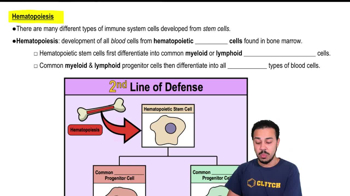
Step 1: Understand the term 'hematopoiesis' which refers to the process of blood cell formation, primarily occurring in the bone marrow.
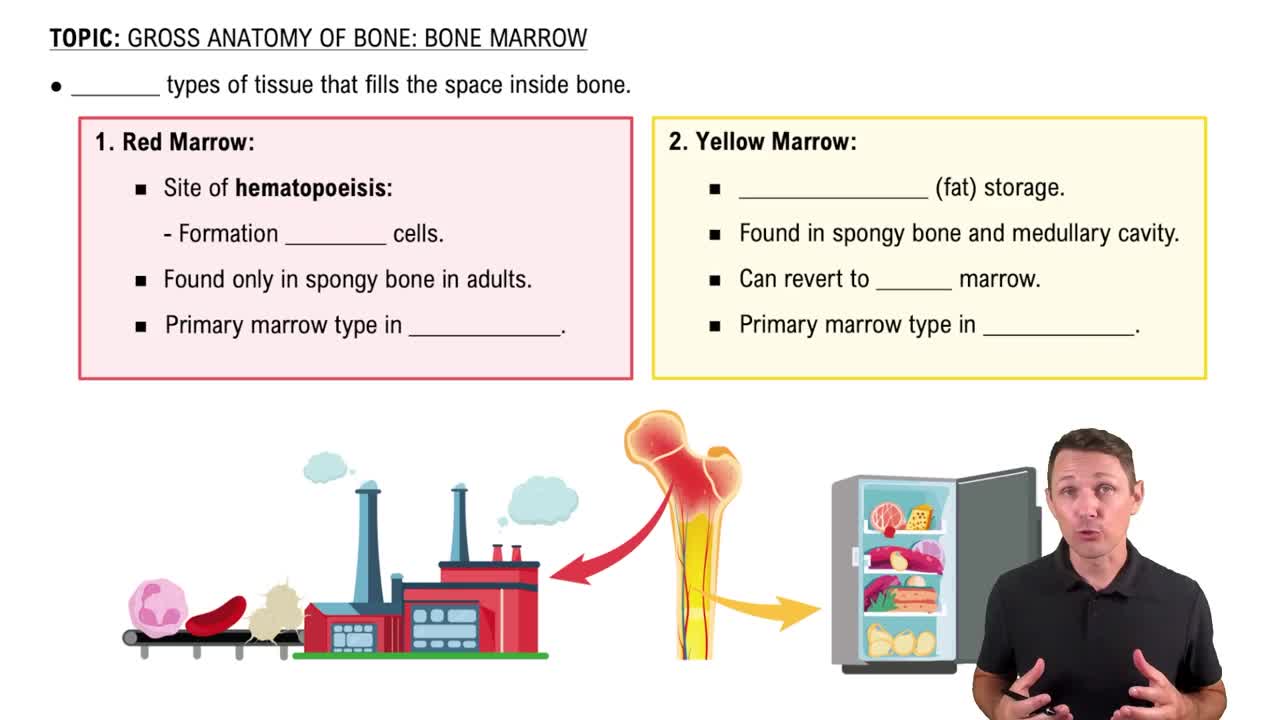
Step 2: Identify the common sites of hematopoiesis during different life stages: in infants, it occurs in the medullary cavities of most bones; in adults, it is mainly in the red marrow of spongy bone and specific regions like the heads of the femur and humerus.
Step 3: Recognize that in healthy adults, the medullary cavities of long bones typically contain yellow marrow, which is mostly fat and not active in hematopoiesis.
Step 4: Compare each option to these facts: options a, b, and c are known sites of hematopoiesis, while option d (medullary cavities in bones of a healthy adult) is generally not a site of active hematopoiesis.
Step 5: Conclude that the correct answer is the site that does not participate in hematopoiesis, which is the medullary cavities in bones of a healthy adult.
Verified video answer for a similar problem:
This video solution was recommended by our tutors as helpful for the problem above
Play a video:
Was this helpful?
Key Concepts
Here are the essential concepts you must grasp in order to answer the question correctly.
Hematopoiesis
Hematopoiesis is the process of blood cell formation, occurring primarily in the bone marrow. It involves the production of red blood cells, white blood cells, and platelets from hematopoietic stem cells. Understanding where hematopoiesis occurs is essential to answer questions about its anatomical sites.
Red marrow is active in blood cell production and is found mainly in spongy bone and certain flat bones. Yellow marrow, found in medullary cavities of long bones in adults, primarily stores fat and is inactive in hematopoiesis. This distinction helps identify which bone areas contribute to blood formation.
In infants, hematopoiesis occurs in the medullary cavities of most bones, including long bones. As a person matures, active hematopoiesis becomes restricted to red marrow in flat bones and the ends of long bones like the femur and humerus. Recognizing these age-related changes clarifies which sites are active in adults versus infants.