Ch. 1 The Human Body: An Orientation
Marieb - Essentials of Human Anatomy & Physiology 13th Edition
Marieb13th EditionEssentials of Human Anatomy & PhysiologyISBN: 9780135624340Not the one you use?Change textbook
Chapter 1, Problem 15

What is the mesentery? The peritoneum

Verified step by step guidance
1
The mesentery is a fold of the peritoneum, which is a serous membrane lining the abdominal cavity and covering the abdominal organs.
It functions to attach the intestines to the posterior abdominal wall, providing structural support and maintaining their position within the abdominal cavity.
The mesentery contains blood vessels, lymphatic vessels, and nerves that supply the intestines, ensuring proper nutrient absorption and waste removal.
Recent studies have classified the mesentery as a continuous organ, emphasizing its role in maintaining abdominal organ organization and communication.
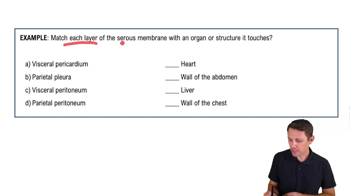
The peritoneum itself consists of two layers: the parietal peritoneum (lining the abdominal wall) and the visceral peritoneum (covering the organs). The mesentery is formed by the visceral peritoneum folding back on itself.

Verified video answer for a similar problem:

This video solution was recommended by our tutors as helpful for the problem above.
Video duration:
2m
Was this helpful?

Key Concepts

Here are the essential concepts you must grasp in order to answer the question correctly.

Mesentery

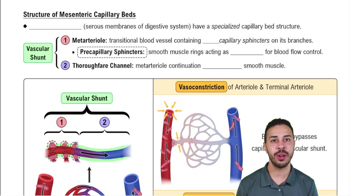
The mesentery is a fold of tissue that attaches the intestines to the posterior abdominal wall, providing support and containing blood vessels, nerves, and lymphatics that supply the intestines. It plays a crucial role in the organization of the abdominal organs and helps maintain their position within the abdominal cavity.
Recommended video:
6:52
Structure of Mesenteric Capillary Beds

Peritoneum

The peritoneum is a serous membrane that lines the abdominal cavity and covers the abdominal organs. It consists of two layers: the parietal peritoneum, which lines the abdominal wall, and the visceral peritoneum, which envelops the organs. This membrane facilitates movement of the organs and serves as a conduit for blood vessels and nerves.
Recommended video:
Guided course
2:45
Organization of the Body: Serous Membrane Locations Example 1

Abdominal Cavity

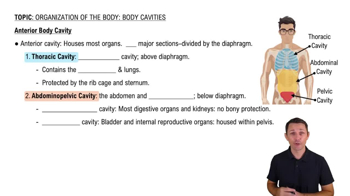
The abdominal cavity is the space within the abdomen that houses various organs, including the stomach, intestines, liver, and kidneys. It is bounded by the diaphragm above and the pelvic cavity below. Understanding the layout and components of the abdominal cavity is essential for comprehending the functions of the mesentery and peritoneum.
Recommended video:
Guided course
3:25
Anterior Body Cavity