Ch. 1 The Human Body: An Orientation
Marieb - Essentials of Human Anatomy & Physiology 13th Edition
Marieb13th EditionEssentials of Human Anatomy & PhysiologyISBN: 9780135624340Not the one you use?Change textbook
Chapter 1, Problem 6

A neurosurgeon orders a spinal tap for a patient. Into what body cavity will the needle be inserted?
a. Ventral
b. Thoracic
c. Dorsal
d. Cranial
e. Pelvic

Verified step by step guidance
1
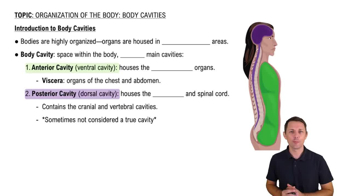
Understand the anatomy of the body cavities: The human body has several major cavities, including the ventral cavity (which contains the thoracic and abdominopelvic cavities) and the dorsal cavity (which contains the cranial and spinal cavities).
Recognize that a spinal tap involves accessing cerebrospinal fluid (CSF) from the spinal cord area. The spinal cord is located within the vertebral canal, which is part of the dorsal cavity.
Eliminate options that do not correspond to the location of the spinal cord: The thoracic cavity (option b) is part of the ventral cavity and houses the heart and lungs, not the spinal cord. The pelvic cavity (option e) is also part of the ventral cavity and contains organs like the bladder and reproductive organs.
Consider the cranial cavity (option d): While it is part of the dorsal cavity, it houses the brain, not the spinal cord. Therefore, it is not the correct location for a spinal tap.
Conclude that the needle for a spinal tap is inserted into the dorsal cavity (option c), specifically into the vertebral canal within the spinal region.

Verified video answer for a similar problem:

This video solution was recommended by our tutors as helpful for the problem above.
Video duration:
1m
Was this helpful?

Key Concepts

Here are the essential concepts you must grasp in order to answer the question correctly.

Body Cavities

The human body is divided into several cavities that house different organs. The main body cavities include the ventral cavity (which contains the thoracic and abdominopelvic cavities) and the dorsal cavity (which includes the cranial and spinal cavities). Understanding these cavities is essential for identifying where medical procedures, like a spinal tap, are performed.
Recommended video:
Guided course
3:20
Introduction to Body Cavities

Spinal Tap Procedure

A spinal tap, or lumbar puncture, is a medical procedure used to collect cerebrospinal fluid (CSF) from the spinal canal. This procedure typically involves inserting a needle into the lower back, specifically into the subarachnoid space within the spinal cavity, which is part of the dorsal cavity. Knowledge of this procedure is crucial for understanding the anatomical location involved.
Recommended video:
Guided course
02:19
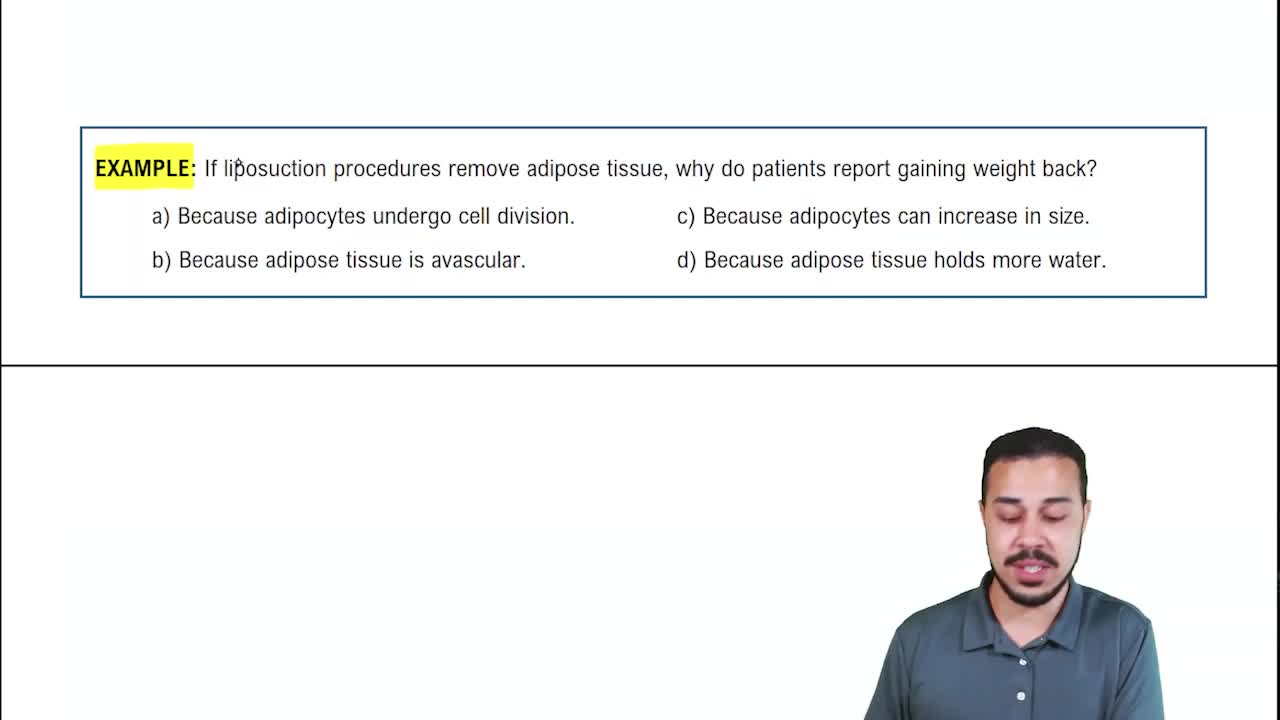
Connective Tissue Proper: Loose Connective Tissue Example 2

Anatomical Orientation

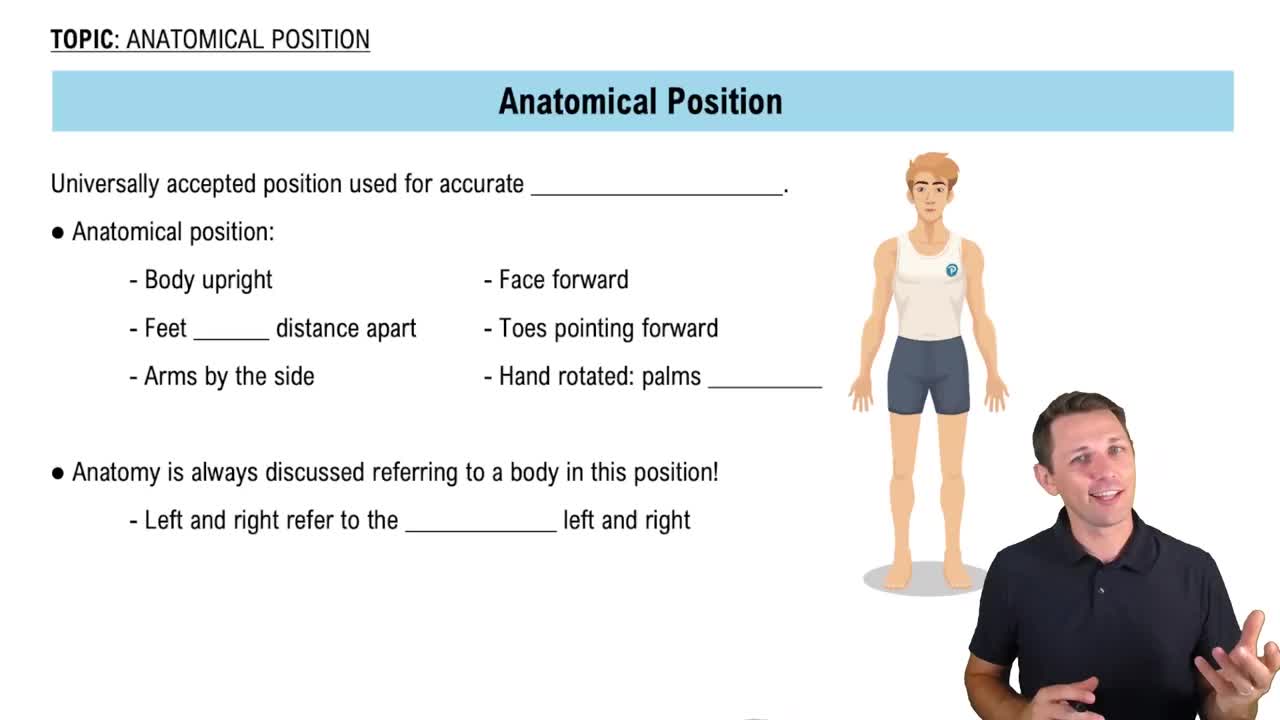
Anatomical orientation refers to the directional terms used to describe the locations of structures within the body. Terms like 'ventral' (front), 'dorsal' (back), 'cranial' (toward the head), and 'pelvic' (lower body) help in accurately identifying where procedures are performed. This understanding is vital for interpreting medical questions and scenarios.
Recommended video:
Guided course
02:40
Anatomical Position