

Ch. 19 Blood
Martini - Fundamentals of Anatomy & Physiology 11th Edition
Martini, Nath, Bartholomew11th EditionFundamentals of Anatomy & PhysiologyISBN: 9780136874089Not the one you use?Change textbook
Chapter 19, Problem 22

A difference between the A, B, and O blood types and the Rh factor is:
(a) Rh agglutinogens are not found on the surface of red blood cells
(b) Rh agglutinogens do not produce a cross-reaction
(c) Individuals who are Rh− do not carry agglutinins to Rh factor unless they have been previously sensitized
(d) Rh agglutinogens are found free in the plasma
(e) Rh agglutinogens are found bound to plasma proteins

Verified step by step guidance
1
Step 1: Understand the ABO blood group system. The ABO blood types (A, B, AB, and O) are determined by the presence or absence of specific antigens (agglutinogens) on the surface of red blood cells. These antigens stimulate the production of antibodies (agglutinins) against the antigens not present on the individual's own red blood cells.
Step 2: Understand the Rh factor system. The Rh factor is another antigen (specifically the D antigen) found on the surface of red blood cells. Unlike the ABO system, the presence or absence of the Rh antigen determines if a person is Rh-positive (Rh+) or Rh-negative (Rh−).
Step 3: Recognize the key difference in antibody production. In the ABO system, individuals naturally have antibodies against the ABO antigens they lack. However, in the Rh system, Rh-negative individuals do not naturally have antibodies (agglutinins) against the Rh antigen unless they have been previously sensitized by exposure to Rh-positive blood (e.g., through transfusion or pregnancy).
Step 4: Evaluate the options based on this understanding. For example, option (c) states that individuals who are Rh− do not carry agglutinins to Rh factor unless previously sensitized, which aligns with the known immunological behavior of the Rh system.
Step 5: Conclude that the main difference between the ABO blood types and the Rh factor lies in the natural presence or absence of antibodies and the conditions under which they develop, focusing on the sensitization requirement for Rh antibodies.

Verified video answer for a similar problem:

This video solution was recommended by our tutors as helpful for the problem above.
Was this helpful?

Key Concepts

Here are the essential concepts you must grasp in order to answer the question correctly.

ABO Blood Group System

The ABO blood group system classifies blood based on the presence or absence of A and B antigens on red blood cells. Individuals inherit one allele from each parent, resulting in blood types A, B, AB, or O. These antigens trigger immune responses if foreign blood types are introduced, making compatibility crucial for transfusions.
Recommended video:
06:04
Functional Groups

Rh Factor and Rh Agglutinogens

The Rh factor is another antigen found on red blood cells, primarily the D antigen, which determines Rh-positive or Rh-negative status. Unlike ABO antigens, Rh agglutinogens are either present or absent, and Rh-negative individuals typically lack anti-Rh antibodies unless sensitized by exposure to Rh-positive blood.
Recommended video:
03:48
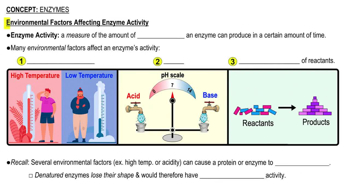
Environmental Factors Affecting Enzyme Activity

Sensitization and Immune Response to Rh Factor

Sensitization occurs when an Rh-negative individual is exposed to Rh-positive blood, leading to the production of anti-Rh antibodies (agglutinins). This immune response can cause complications in transfusions or pregnancy, as the body attacks Rh-positive red blood cells, highlighting the importance of Rh compatibility.
Recommended video:
6:59
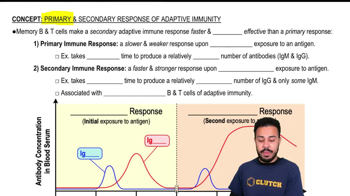
Primary and Secondary Response of Adaptive Immunity