Cyanide binds to at least one molecule involved in producing ATP. If a cell is exposed to cyanide, most of the cyanide will be found within the
a. mitochondria.
b. ribosomes.
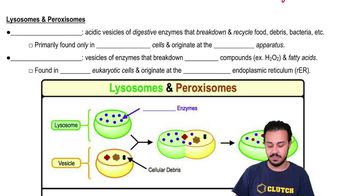
c. peroxisomes.
d. lysosomes.
Verified step by step guidance
1
Identify the primary function of each organelle listed in the options: mitochondria, ribosomes, peroxisomes, and lysosomes.
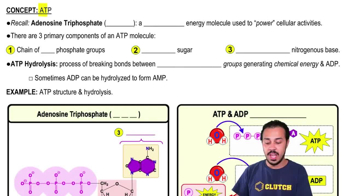
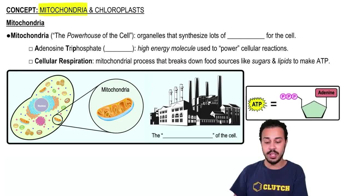
Recall that ATP (adenosine triphosphate) is the main energy currency of the cell and is primarily produced in the mitochondria through cellular respiration.
Understand that cyanide is a potent inhibitor of the electron transport chain, a critical step in ATP production, which occurs in the mitochondria.
Consider that since cyanide affects ATP production, it would most likely bind to components within the mitochondria where the electron transport chain is located.
Conclude that the organelle where most of the cyanide will be found is the one involved in ATP production, which is the mitochondria.
Verified video answer for a similar problem:
This video solution was recommended by our tutors as helpful for the problem above.
Video duration:
1m
Play a video:
0 Comments
Key Concepts
Here are the essential concepts you must grasp in order to answer the question correctly.
ATP Production
Adenosine triphosphate (ATP) is the primary energy carrier in cells, produced mainly in the mitochondria through cellular respiration. This process involves the electron transport chain and oxidative phosphorylation, where energy from nutrients is converted into ATP. Understanding ATP production is crucial for grasping how cyanide affects cellular metabolism.
Mitochondria are known as the powerhouses of the cell, where ATP is generated through aerobic respiration. They contain enzymes and proteins essential for the electron transport chain, making them the primary site for ATP synthesis. When cyanide is introduced, it disrupts this process, leading to a buildup of cyanide within the mitochondria.
Cyanide is a potent inhibitor of cellular respiration, specifically targeting cytochrome c oxidase in the electron transport chain. This inhibition prevents the transfer of electrons, halting ATP production and leading to cellular energy failure. Understanding cyanide's mechanism of action is vital for predicting its accumulation in cellular structures, particularly the mitochondria.

 1:25 minutes
 Verified step by step guidance
 04:18
04:18