In which cell would you find the most mitochondria?
a. pancreatic cell that secretes digestive enzymes
b. ovarian cell that produces estrogen (a steroid hormone)
c. muscle cell in the thigh of a long-distance runner
d. white blood cell that engulfs bacteria
Verified step by step guidance
1
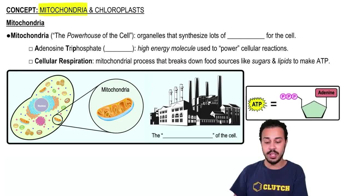
Identify the function of mitochondria: Mitochondria are known as the powerhouses of the cell, responsible for producing ATP through cellular respiration, which is crucial for energy-demanding processes.
Consider the energy requirements of each cell type: Cells with higher energy demands will typically have more mitochondria.
Analyze the pancreatic cell: It secretes digestive enzymes, which requires energy, but not as much as some other cell types.
Evaluate the ovarian cell: It produces estrogen, a process that involves steroid synthesis, which requires energy but is not the most energy-intensive process.
Examine the muscle cell: Muscle cells, especially in long-distance runners, require a significant amount of energy for sustained contraction and endurance activities, indicating a high number of mitochondria.
Verified video answer for a similar problem:
This video solution was recommended by our tutors as helpful for the problem above.
Video duration:
2m
Play a video:
0 Comments
Key Concepts
Here are the essential concepts you must grasp in order to answer the question correctly.
Mitochondrial Function
Mitochondria are known as the powerhouse of the cell, responsible for producing adenosine triphosphate (ATP) through cellular respiration. They play a crucial role in energy metabolism, particularly in cells that require high energy levels for their functions.
Different cell types have varying energy demands based on their functions. For instance, muscle cells, especially in athletes, require significant energy for contraction and endurance, leading to a higher number of mitochondria compared to other cell types.
Understanding the specific functions of different cell types helps in predicting mitochondrial abundance. For example, pancreatic cells and ovarian cells have moderate energy needs, while muscle cells, particularly in active individuals, are adapted to have a greater number of mitochondria to meet their high energy requirements.

 2:35 minutes
 Verified step by step guidance
 04:18
04:18