What two cell populations make up nervous tissue? What is the function of each?
Ch. 4 The Tissue Level of Organization
Martini, Nath, Bartholomew11th EditionFundamentals of Anatomy & PhysiologyISBN: 9780136874089Not the one you use?Change textbook
All textbooks
Martini, Nath, Bartholomew 11th Edition
Ch. 4 The Tissue Level of Organization
Problem 17
Martini, Nath, Bartholomew 11th Edition
Ch. 4 The Tissue Level of Organization
Problem 17Chapter 4, Problem 17
What are the four essential functions of epithelial tissue?
Verified step by step guidance1
Understand that epithelial tissue is one of the four primary tissue types in the body, and it serves several key roles essential for maintaining homeostasis and protecting the body.
Identify the first essential function: Protection. Epithelial tissue acts as a barrier to protect underlying tissues from mechanical injury, harmful chemicals, invading pathogens, and excessive water loss.
Recognize the second function: Absorption. Certain epithelial tissues, such as those lining the intestines, are specialized to absorb nutrients and other substances from the external environment into the body.
Note the third function: Secretion. Many epithelial cells form glands that produce and release substances like enzymes, hormones, mucus, and sweat, which are vital for various physiological processes.
Finally, understand the fourth function: Sensation. Epithelial tissues contain sensory nerve endings that allow the body to detect changes in the environment, such as touch, pressure, temperature, and pain.

Verified video answer for a similar problem:
This video solution was recommended by our tutors as helpful for the problem above.
Video duration:
2mWas this helpful?
Key Concepts
Here are the essential concepts you must grasp in order to answer the question correctly.
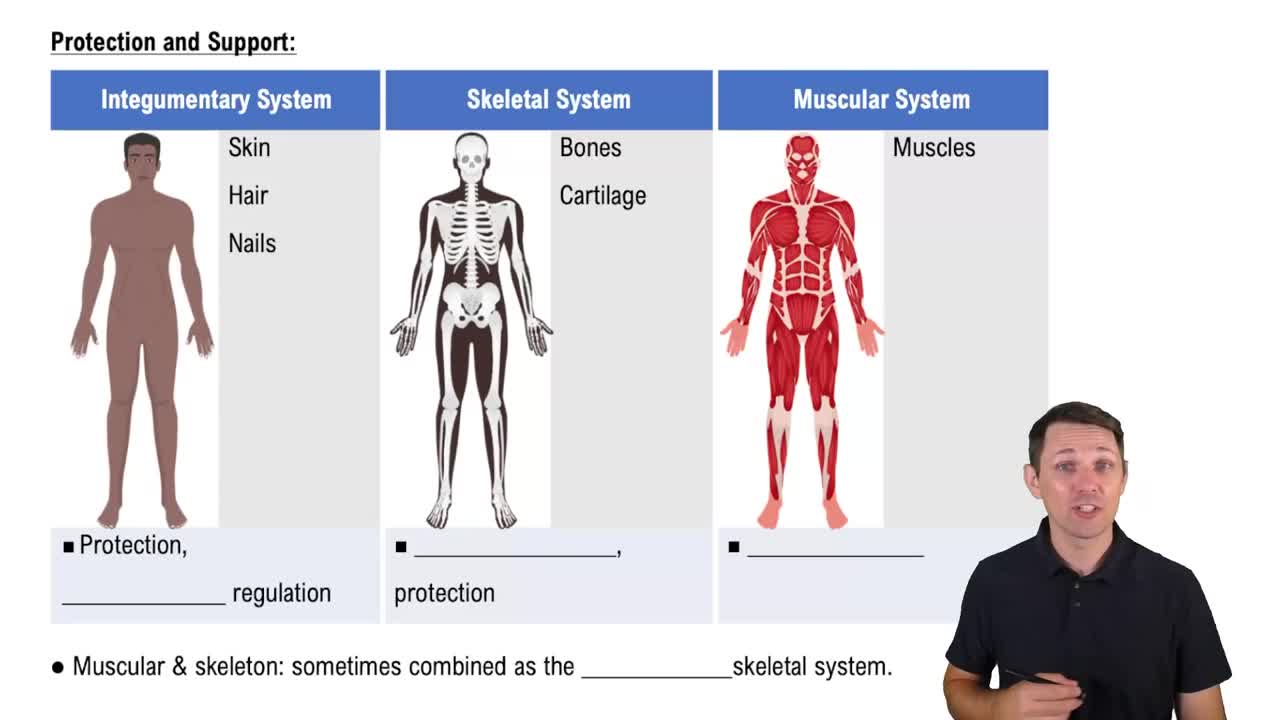
Protection
Epithelial tissue acts as a barrier that protects underlying tissues from mechanical injury, harmful chemicals, pathogens, and excessive water loss. This protective function is vital for maintaining the body's integrity and preventing infections.
Recommended video:
Guided course
Protection and Support
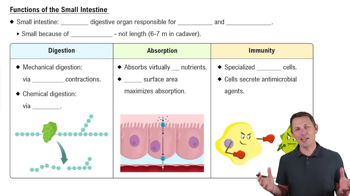
Absorption
Certain epithelial tissues are specialized to absorb substances such as nutrients and water. For example, the epithelial lining of the intestines absorbs nutrients from digested food into the bloodstream.
Recommended video:
Guided course
Functions of the Small Intestine
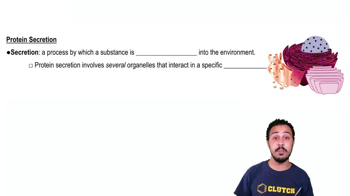
Secretion
Epithelial cells can produce and release substances like enzymes, hormones, mucus, and sweat. Glandular epithelium, for instance, forms glands that secrete these important fluids to regulate body functions.
Recommended video:
Protein Secretion
Related Practice
Textbook Question
36
views
Textbook Question
Axons, dendrites, and a cell body are characteristic of cells located in
(a) Nervous tissue
(b) Muscle tissue
(c) Connective tissue
(d) Epithelial tissue
55
views
Textbook Question
The type of cartilage growth characterized by adding new layers of cartilage to the surface is
(a) Interstitial growth
(b) Appositional growth
(c) Intramembranous growth
(d) Longitudinal growth.
71
views
Textbook Question
List three basic components of connective tissues.
34
views
Textbook Question
Describe the fluid connective tissues in the human body. What are the main differences between fluid connective tissues and supporting connective tissues?
57
views
Textbook Question
The three major types of cartilage in the body are
(a) Collagen, reticular, and elastic
(b) Areolar, adipose, and reticular
(c) Hyaline, elastic, and fibrous
(d) Tendons, reticular, and elastic
154
views