What does the chemiosmotic hypothesis claim?
a. ATP is generated using phosphates taken from intermediates in the electron transport chain.
b. ATP is generated using a phosphate gradient produced by glycolysis and the citric acid cycle.
c. ATP is generated using a proton-motive force that is produced by the electron transport chain.
d. Water is generated using electrons taken from NADH and FADH2 and transported through the electron transport chain.
Verified step by step guidance
1
Understand the context: The chemiosmotic hypothesis is a scientific theory that explains how ATP is produced in the mitochondria during cellular respiration.
Identify the key components: The hypothesis involves the electron transport chain, a proton gradient, and ATP synthase.
Analyze the options: Consider how each option relates to the process of ATP production in the mitochondria.
Focus on the correct mechanism: The chemiosmotic hypothesis specifically involves the creation of a proton-motive force across the inner mitochondrial membrane.
Determine the correct claim: The hypothesis claims that ATP is generated using the proton-motive force produced by the electron transport chain, which aligns with option c.
Verified video answer for a similar problem:
This video solution was recommended by our tutors as helpful for the problem above.
Video duration:
2m
Play a video:
0 Comments
Key Concepts
Here are the essential concepts you must grasp in order to answer the question correctly.
Chemiosmotic Hypothesis
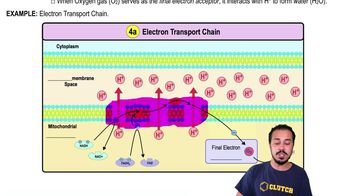
The chemiosmotic hypothesis, proposed by Peter Mitchell, explains how ATP is synthesized in mitochondria and chloroplasts. It posits that the energy from electron transport chains is used to pump protons across a membrane, creating a proton gradient. This gradient generates a proton-motive force that drives ATP synthesis as protons flow back through ATP synthase.
Proton-motive force refers to the potential energy stored in the form of a proton gradient across a membrane. This force is crucial for ATP production, as it drives protons back into the mitochondrial matrix through ATP synthase, facilitating the conversion of ADP and inorganic phosphate into ATP. It is a key component of cellular respiration and photosynthesis.
The electron transport chain (ETC) is a series of protein complexes located in the inner mitochondrial membrane that transfer electrons from electron donors like NADH and FADH2 to electron acceptors. As electrons move through the chain, energy is released and used to pump protons into the intermembrane space, contributing to the proton gradient essential for ATP synthesis via the chemiosmotic mechanism.

 2:53 minutes
 Verified step by step guidance
 7:10
7:10