Normal balance depends on information transmitted from a number of sensory receptor types. Name at least three of these receptors.
Verified step by step guidance
1
Understand that balance, or equilibrium, is maintained by the integration of sensory input from multiple receptor types in the body. These receptors provide information about body position, movement, and spatial orientation.
The first type of receptor involved in balance is the vestibular receptors located in the inner ear. These receptors detect changes in head position and motion through structures like the semicircular canals and otolith organs.
The second type of receptor is the visual receptors in the eyes. These receptors provide information about the environment and help the brain determine the body's position relative to external objects.
The third type of receptor is the proprioceptors found in muscles, tendons, and joints. These receptors sense the position and movement of body parts, contributing to the awareness of body posture and balance.
Recognize that the brain integrates input from these sensory receptors (vestibular, visual, and proprioceptive) to maintain balance and coordinate movements effectively.
Verified video answer for a similar problem:
This video solution was recommended by our tutors as helpful for the problem above
Video duration:
2m
Play a video:
Was this helpful?
Key Concepts
Here are the essential concepts you must grasp in order to answer the question correctly.
Sensory Receptors
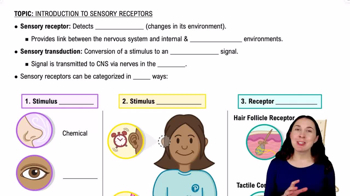
Sensory receptors are specialized cells that detect and respond to specific types of stimuli from the environment. They convert these stimuli into electrical signals that can be interpreted by the nervous system. Common types include photoreceptors for light, mechanoreceptors for pressure and touch, and chemoreceptors for chemical stimuli.
There are several types of sensory receptors, each tuned to different modalities of sensation. For example, thermoreceptors respond to temperature changes, nociceptors detect pain, and proprioceptors provide information about body position and movement. Understanding these types is crucial for comprehending how the body maintains balance and responds to its environment.
Normal balance, or equilibrium, is the body's ability to maintain its center of mass over its base of support. It relies on the integration of sensory information from various receptors, including those in the vestibular system (inner ear), visual system, and proprioceptors in muscles and joints. This integration allows for coordinated movements and stability.