Mitosis .
a. occurs only in cancerous cells;
b. occurs only in skin cells;
c. produces daughter cells that are exact genetic copies of the parent cell;
d. results in the production of three different cells
Verified step by step guidance
1
Understand the process of mitosis: Mitosis is a type of cell division that results in two daughter cells each having the same number and kind of chromosomes as the parent nucleus, typical of ordinary tissue growth.
Identify the types of cells involved in mitosis: Mitosis occurs in somatic cells, which are all cells in the body except for germ cells (sperm and egg cells).
Analyze the genetic outcome of mitosis: The key outcome of mitosis is to produce two genetically identical cells from a single parent cell.
Evaluate the options given in the problem: Consider whether mitosis is limited to specific types of cells or if it results in genetic copies or different cells.
Select the correct option based on the characteristics of mitosis: Choose the option that correctly describes the cells produced by mitosis and the universality of the process in body cells.
Verified video answer for a similar problem:
This video solution was recommended by our tutors as helpful for the problem above.
Video duration:
1m
Play a video:
0 Comments
Key Concepts
Here are the essential concepts you must grasp in order to answer the question correctly.
Mitosis
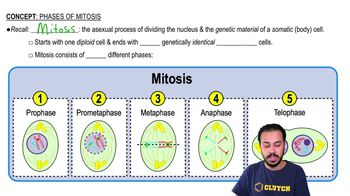
Mitosis is a type of cell division that results in two genetically identical daughter cells from a single parent cell. It is a crucial process for growth, development, and tissue repair in multicellular organisms. Mitosis consists of several stages: prophase, metaphase, anaphase, and telophase, followed by cytokinesis, which divides the cytoplasm.
During mitosis, the daughter cells produced are exact genetic copies of the parent cell, meaning they have the same number of chromosomes and identical DNA sequences. This genetic consistency is vital for maintaining the organism's genetic integrity and ensuring that all cells function properly. Any errors in this process can lead to mutations or diseases, including cancer.
Mitosis occurs in somatic (non-reproductive) cells throughout the body, not just in specific types like skin cells or cancerous cells. It is essential for normal growth and repair processes in tissues. In contrast, meiosis is the type of cell division that produces gametes (sperm and eggs) and results in genetic diversity.

 1:18 minutes
 Verified step by step guidance
 03:21
03:21