Ch. 19 The Cardiovascular System: Blood Vessels
Marieb - Human Anatomy & Physiology 7th Edition
Marieb, Hoehn7th EditionHuman Anatomy & PhysiologyISBN: 9780805359091Not the one you use?Change textbook
Chapter 18, Problem 23

Describe neural and chemical (both systemic and local) effects exerted on the blood vessels when you are fleeing from a mugger. (Be careful, this is more involved than it appears at first glance.)

Verified step by step guidance
1
Step 1: Identify the initial neural response triggered by the perception of danger, which activates the sympathetic nervous system. This leads to the release of neurotransmitters like norepinephrine that act on blood vessels.
Step 2: Explain how sympathetic stimulation causes vasoconstriction in certain blood vessels (such as those in the skin and digestive organs) by binding to alpha-adrenergic receptors, reducing blood flow to these areas.
Step 3: Describe how vasodilation occurs in skeletal muscle blood vessels due to beta-2 adrenergic receptor activation by epinephrine released from the adrenal medulla, increasing blood flow to muscles needed for rapid movement.
Step 4: Discuss the role of systemic chemical effects, such as circulating epinephrine and norepinephrine, which reinforce the neural signals and help maintain blood pressure and redistribute blood flow during the fight-or-flight response.
Step 5: Consider local chemical effects, including the release of metabolites like carbon dioxide, lactic acid, and adenosine in active muscles, which cause local vasodilation to further enhance blood supply where it is most needed.

Verified video answer for a similar problem:

This video solution was recommended by our tutors as helpful for the problem above.
Video duration:
1m
Was this helpful?

Key Concepts

Here are the essential concepts you must grasp in order to answer the question correctly.

Sympathetic Nervous System Activation

When fleeing from danger, the sympathetic nervous system triggers the 'fight or flight' response, causing widespread vasoconstriction in many blood vessels to redirect blood flow to essential muscles and organs. This neural effect increases heart rate and blood pressure, preparing the body for rapid action.
Recommended video:
1:20
Sympathetic Nervous System Example 1

Systemic Chemical Effects: Hormonal Regulation

Stress induces the release of systemic hormones like adrenaline (epinephrine) and noradrenaline from the adrenal medulla, which circulate in the blood and cause vasoconstriction or vasodilation depending on receptor types in different tissues. These hormones enhance blood flow to skeletal muscles while restricting it to non-essential areas.
Recommended video:
1:32
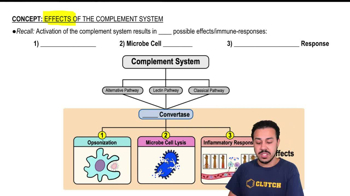
Effects of the Complement System

Local Chemical Effects on Blood Vessels

Locally, metabolites such as carbon dioxide, lactic acid, and low oxygen levels accumulate in active muscles, causing vasodilation to increase blood supply. This local chemical regulation ensures that muscles receive enough oxygen and nutrients during intense physical activity like fleeing.
Recommended video:
4:59
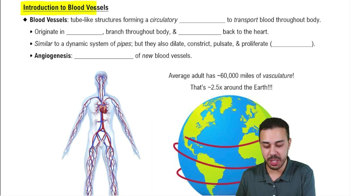
Blood Vessels
Related Practice
Textbook Question

Explain the reasons for the observed changes in blood flow velocity in the different regions of the circulation.

1032
views
Textbook Question

The Agawam High School band is playing some lively marches while the coaches are giving pep talks to their respective football squads. Although it is September, it is unseasonably hot (88°F/31°C) and the band uniforms are wool. Suddenly Ryan, the tuba player, becomes light-headed and faints. Explain his fainting in terms of vascular events.

966
views
Textbook Question

How does the control of blood flow to the skin for the purpose of regulating body temperature differ from the control of nutrient blood flow to skin cells?

869
views
1
rank
Textbook Question

A 60-year-old man is unable to walk more than 100 yards without experiencing severe pain in his left leg; the pain is relieved by resting for 5–10 minutes. He is told that the arteries of his leg are becoming occluded with fatty material and is advised to have the sympathetic nerves serving that body region severed. Explain how such surgery might help to relieve this man's problem.

1051
views
Textbook Question

Write an equation showing the relationship between total peripheral resistance, blood flow, and blood pressure.

89
views
Textbook Question

Your friend Jillian, who knows little about science, is reading a magazine article about a patient who had an 'aneurysm at the base of his brain that suddenly grew much larger.' The surgeons' first goal was to 'keep it from rupturing,' and the second goal was to 'relieve the pressure on the brain stem and cranial nerves.' The surgeons were able to 'replace the aneurysm with a section of plastic tubing,' so the patient recovered. Jillian asks you what all this means. Explain.

883
views