At metaphase of mitosis, .
a. the chromosomes are condensed and found at the poles;
b. the chromosomes are composed of one sister chromatid;
c. cytokinesis begins;
d. the chromosomes are composed of two sister chromatids and are lined up along the equator of the cell
Verified step by step guidance
1
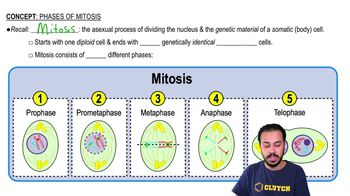
Step 1: Understand the stages of mitosis. Mitosis is a process of cell division that results in two daughter cells each having the same number and kind of chromosomes as the parent nucleus. It is divided into several stages: prophase, metaphase, anaphase, and telophase.
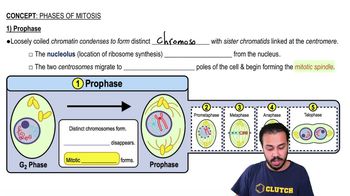
Step 2: Identify the characteristics of each stage. During prophase, the chromosomes condense and become visible. During metaphase, the chromosomes align at the equator of the cell. During anaphase, the sister chromatids separate and move towards the poles. During telophase, the chromosomes decondense and the nuclear envelope reforms.
Step 3: Analyze the given options. Option a suggests that the chromosomes are at the poles during metaphase, which is incorrect. This happens during anaphase. Option b suggests that the chromosomes are composed of one sister chromatid, which is incorrect. Each chromosome is composed of two sister chromatids during metaphase. Option c suggests that cytokinesis begins during metaphase, which is incorrect. Cytokinesis usually begins during anaphase or telophase.
Step 4: Based on the analysis, option d is the correct answer. During metaphase, the chromosomes are composed of two sister chromatids and are lined up along the equator of the cell.
Verified video answer for a similar problem:
This video solution was recommended by our tutors as helpful for the problem above.
Video duration:
52s
Play a video:
0 Comments
Key Concepts
Here are the essential concepts you must grasp in order to answer the question correctly.
Mitosis
Mitosis is the process of cell division that results in two genetically identical daughter cells. It consists of several stages: prophase, metaphase, anaphase, and telophase. During metaphase, chromosomes align at the cell's equatorial plane, ensuring that each daughter cell will receive an identical set of chromosomes.
Chromatids are the two identical halves of a replicated chromosome, joined together at a region called the centromere. During metaphase, each chromosome consists of two sister chromatids, which are crucial for accurate segregation during cell division. This ensures that each daughter cell receives the correct number of chromosomes.
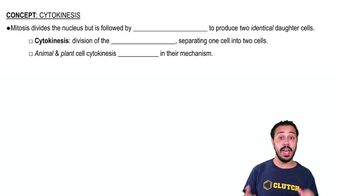
Cytokinesis is the final step of cell division, occurring after mitosis, where the cytoplasm of a parental cell is divided into two daughter cells. It typically begins during telophase and involves the formation of a cleavage furrow in animal cells or a cell plate in plant cells. It is essential for completing the cell division process and ensuring that each daughter cell is a separate entity.

 0:52 minutes
 Verified step by step guidance
 03:21
03:21