
Ch. 3 The Cellular Level of Organization
Martini - Fundamentals of Anatomy & Physiology 11th Edition
Martini, Nath, Bartholomew11th EditionFundamentals of Anatomy & PhysiologyISBN: 9780136874089Not the one you use?Change textbook
Chapter 3, Problem 12

What are four general functions of the plasma membrane?

Verified step by step guidance
1
Understand that the plasma membrane is a critical structure that surrounds the cell, controlling interactions between the cell and its environment.
Identify the first general function: it acts as a selective barrier, regulating the entry and exit of substances to maintain homeostasis.
Recognize the second function: it provides structural support and maintains the shape of the cell.
Note the third function: it facilitates communication between cells through receptor proteins that detect chemical signals.
Finally, understand the fourth function: it enables cell recognition and adhesion, allowing cells to form tissues and interact appropriately.

Verified video answer for a similar problem:

This video solution was recommended by our tutors as helpful for the problem above.
Video duration:
5m
Was this helpful?

Key Concepts

Here are the essential concepts you must grasp in order to answer the question correctly.

Selective Permeability

The plasma membrane controls the movement of substances in and out of the cell, allowing essential molecules like nutrients and oxygen to enter while keeping harmful substances out. This selective permeability is crucial for maintaining the cell's internal environment.
Recommended video:
6:43
Clonal Selection

Communication and Signaling

The plasma membrane contains receptor proteins that detect chemical signals from the environment or other cells. These signals trigger cellular responses, enabling the cell to communicate and adapt to changes.
Recommended video:
2:59
Map of the Lesson on Cell Communication

Structural Support and Protection

The plasma membrane provides a flexible boundary that protects the cell's internal components. It also helps maintain the cell's shape and anchors the cytoskeleton, contributing to the cell's structural integrity.
Recommended video:
Guided course
02:59
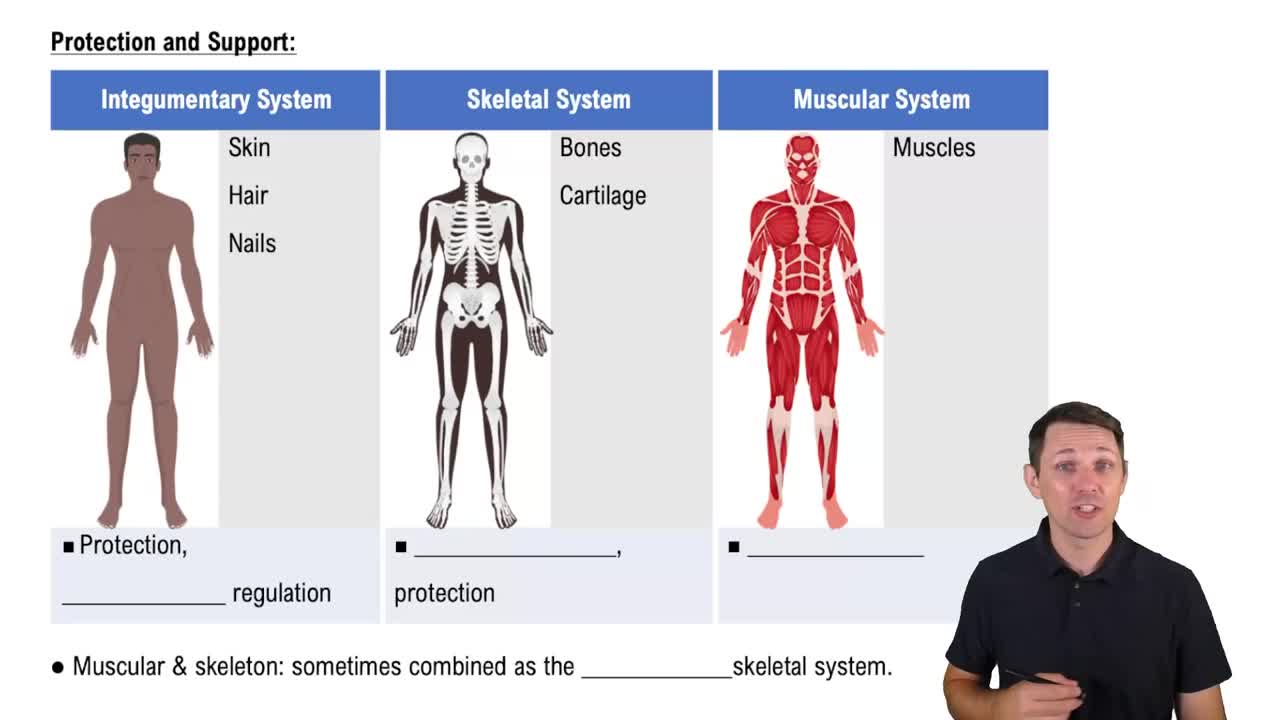
Protection and Support