Ch. 1 An Introduction to Anatomy and Physiology
Martini - Fundamentals of Anatomy & Physiology 11th Edition
Martini, Nath, Bartholomew11th EditionFundamentals of Anatomy & PhysiologyISBN: 9780136874089Not the one you use?Change textbook
Chapter 1, Problem 11

Match each numbered item with the most closely related lettered item. Use letters for answers in the spaces provided.
_____Labor and delivery
a. Study of tissues 
b. Constant internal environment 
c. Face-up position 
d. Study of functions 
e. Positive feedback 
f. Organ system 
g. Study of cells 
h. Negative feedback 
i. Serous membrane 
j. Study of internal and external body structures 
k. Diaphragm 
l. Tissue 
m. Peritoneal cavity 
n. Organ 
o. Face-down position

Verified step by step guidance
1
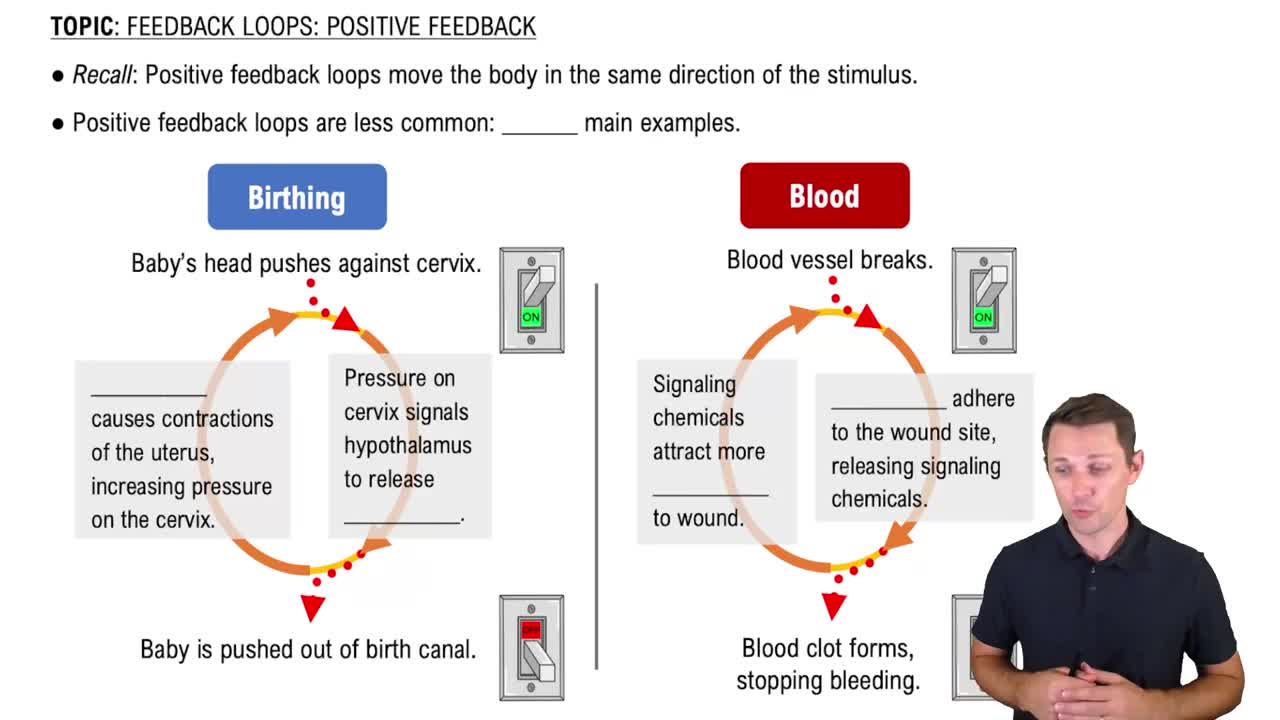
Understand the key concept behind 'Labor and delivery' in Anatomy & Physiology. Labor and delivery involve physiological processes that amplify or enhance a response until a specific outcome is achieved.
Recall that positive feedback mechanisms are responsible for amplifying changes during processes like labor, where contractions increase in intensity until delivery occurs.
Identify the lettered option that best matches this concept. Among the options, 'e. Positive feedback' describes this mechanism accurately.
Match 'Labor and delivery' with 'e. Positive feedback' because labor contractions intensify through positive feedback loops.
Confirm that other options like negative feedback or study-related terms do not fit the physiological process of labor and delivery.

Verified video answer for a similar problem:

This video solution was recommended by our tutors as helpful for the problem above.
Video duration:
7m
Was this helpful?

Key Concepts

Here are the essential concepts you must grasp in order to answer the question correctly.

Positive Feedback

Positive feedback is a physiological process where a change in a variable triggers mechanisms that amplify that change. Unlike negative feedback, it reinforces the direction of the stimulus, often leading to a specific outcome, such as the intensification of contractions during labor and delivery.
Recommended video:
Guided course
03:25
Positive Feedback Loops

Organ System

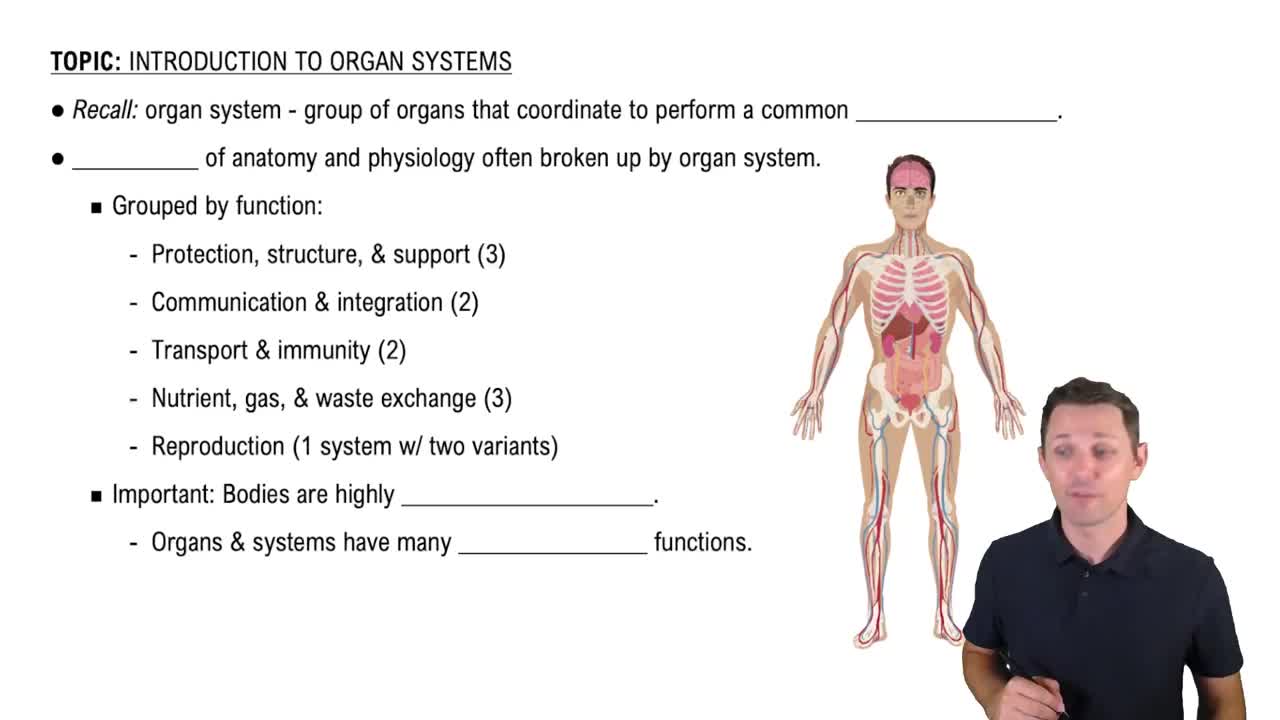
An organ system is a group of organs that work together to perform complex functions essential for the body’s survival. For example, the reproductive system includes organs involved in labor and delivery, coordinating to ensure successful childbirth.
Recommended video:
Guided course
02:29
Introduction to Organ Systems

Study of Functions (Physiology)

Physiology is the study of how the body and its parts function. Understanding physiological processes, such as muscle contractions during labor, helps explain how the body maintains homeostasis and responds to stimuli.
Recommended video:
06:04
Functional Groups
Related Practice
Textbook Question

Match each numbered item with the most closely related lettered item. Use letters for answers in the spaces provided.

_____Temperature regulation

a. Study of tissues 

b. Constant internal environment 

c. Face-up position 

d. Study of functions 

e. Positive feedback 

f. Organ system 

g. Study of cells 

h. Negative feedback 

i. Serous membrane 

j. Study of internal and external body structures 

k. Diaphragm 

l. Tissue 

m. Peritoneal cavity 

n. Organ 

o. Face-down position

39
views
Textbook Question

Match each numbered item with the most closely related lettered item. Use letters for answers in the spaces provided.

_____Endocrine

a. Study of tissues 

b. Constant internal environment 

c. Face-up position 

d. Study of functions 

e. Positive feedback 

f. Organ system 

g. Study of cells 

h. Negative feedback 

i. Serous membrane 

j. Study of internal and external body structures 

k. Diaphragm 

l. Tissue 

m. Peritoneal cavity 

n. Organ 

o. Face-down position

63
views
Textbook Question

Match each numbered item with the most closely related lettered item. Use letters for answers in the spaces provided.

_____Divides thoracic and abdominopelvic body cavities

a. Study of tissues 

b. Constant internal environment 

c. Face-up position 

d. Study of functions 

e. Positive feedback 

f. Organ system 

g. Study of cells 

h. Negative feedback 

i. Serous membrane 

j. Study of internal and external body structures 

k. Diaphragm 

l. Tissue 

m. Peritoneal cavity 

n. Organ 

o. Face-down position

34
views
Textbook Question

Match each numbered item with the most closely related lettered item. Use letters for answers in the spaces provided.

___Heart

a. Study of tissues 

b. Constant internal environment 

c. Face-up position 

d. Study of functions 

e. Positive feedback 

f. Organ system 

g. Study of cells 

h. Negative feedback 

i. Serous membrane 

j. Study of internal and external body structures 

k. Diaphragm 

l. Tissue 

m. Peritoneal cavity 

n. Organ 

o. Face-down position

45
views
Textbook Question

Match each numbered item with the most closely related lettered item. Use letters for answers in the spaces provided.

_____Supine

a. Study of tissues 

b. Constant internal environment 

c. Face-up position 

d. Study of functions 

e. Positive feedback 

f. Organ system 

g. Study of cells 

h. Negative feedback 

i. Serous membrane 

j. Study of internal and external body structures 

k. Diaphragm 

l. Tissue 

m. Peritoneal cavity 

n. Organ 

o. Face-down position

60
views
Textbook Question

Match each numbered item with the most closely related lettered item. Use letters for answers in the spaces provided.

____Prone

a. Study of tissues 

b. Constant internal environment 

c. Face-up position 

d. Study of functions 

e. Positive feedback 

f. Organ system 

g. Study of cells 

h. Negative feedback 

i. Serous membrane 

j. Study of internal and external body structures 

k. Diaphragm 

l. Tissue 

m. Peritoneal cavity 

n. Organ 

o. Face-down position

42
views