What lipid type is stored in fat deposits beneath the skin? a. Triglyceride b. Steroid c. Vitamin D d. Phospholipid e. Prostaglandin
Verified step by step guidance
1
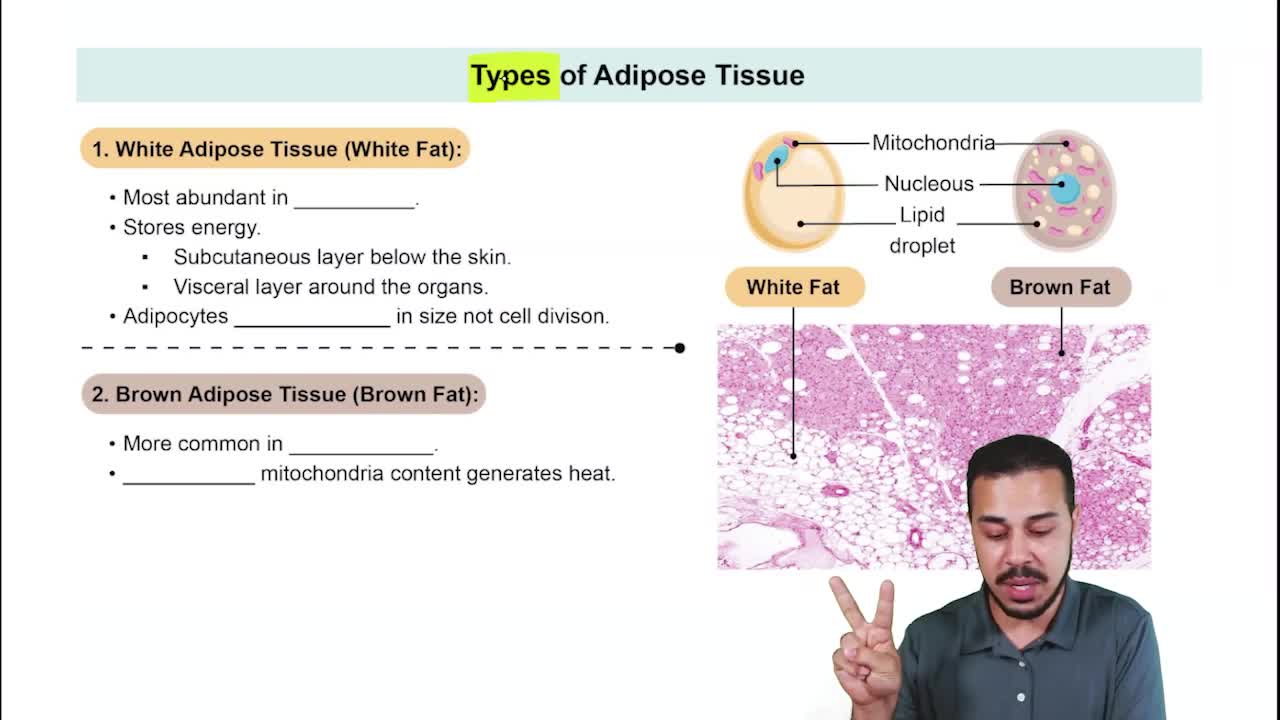
Understand the role of fat deposits beneath the skin: Fat deposits primarily serve as energy storage and insulation for the body. The type of lipid stored here is typically used for long-term energy storage.
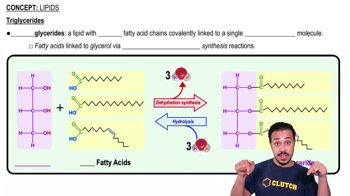
Review the structure and function of triglycerides: Triglycerides are composed of glycerol and three fatty acid chains. They are the primary form of stored energy in adipose tissue beneath the skin.
Consider the role of steroids: Steroids, such as cholesterol, are involved in cell membrane structure and hormone synthesis but are not typically stored in fat deposits for energy purposes.
Evaluate Vitamin D: Vitamin D is a fat-soluble vitamin involved in calcium regulation and bone health. It is not stored in fat deposits as a lipid type for energy storage.
Analyze phospholipids and prostaglandins: Phospholipids are structural components of cell membranes, and prostaglandins are signaling molecules. Neither is stored in fat deposits beneath the skin for energy purposes.
Verified video answer for a similar problem:
This video solution was recommended by our tutors as helpful for the problem above
Video duration:
1m
Play a video:
Was this helpful?
Key Concepts
Here are the essential concepts you must grasp in order to answer the question correctly.
Triglycerides
Triglycerides are a type of lipid composed of three fatty acid molecules attached to a glycerol backbone. They are the primary form of stored fat in the body, found in adipose tissue beneath the skin, and serve as a major energy reserve. When the body requires energy, triglycerides can be broken down into fatty acids and glycerol for use.
Lipids are a diverse group of hydrophobic organic compounds, including triglycerides, phospholipids, steroids, and waxes. Each type has distinct functions; for example, phospholipids are crucial for cell membrane structure, while steroids play roles in signaling and hormone production. Understanding these categories helps in identifying their specific roles in biological systems.
Adipose tissue is a specialized connective tissue that stores energy in the form of fat and provides insulation and cushioning for the body. It is primarily composed of adipocytes, which are cells that store triglycerides. This tissue plays a vital role in energy metabolism and maintaining body temperature.