20. Electrochemistry
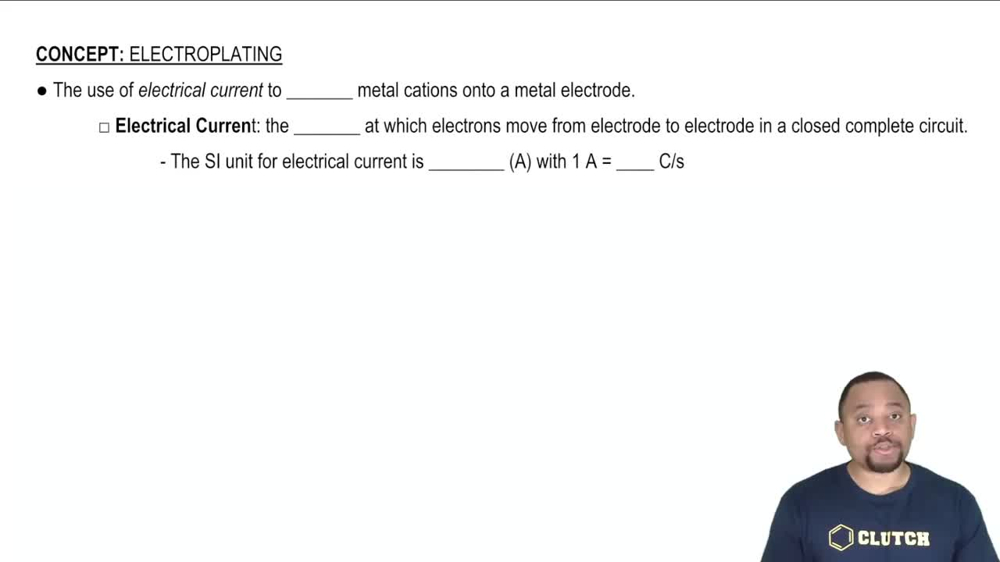
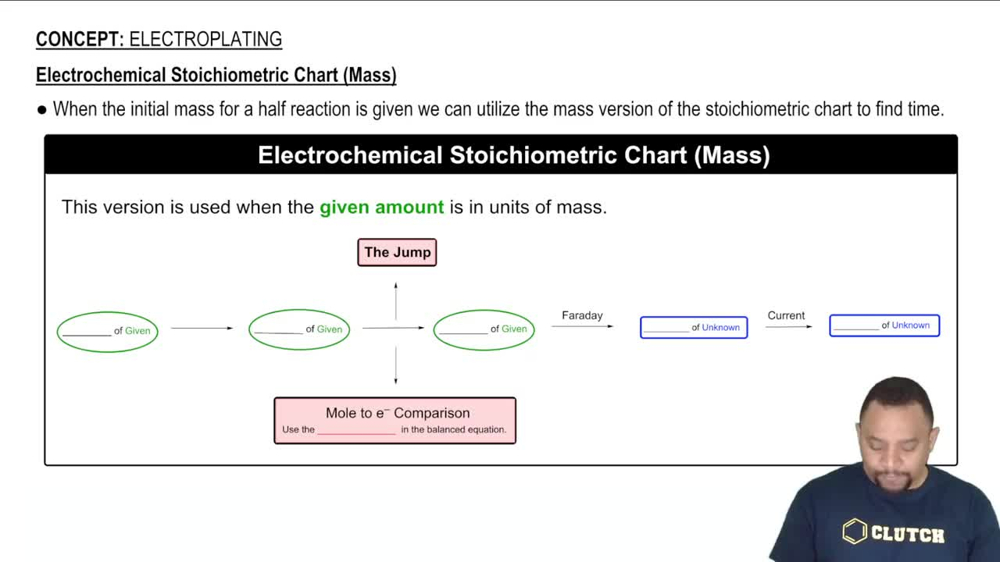
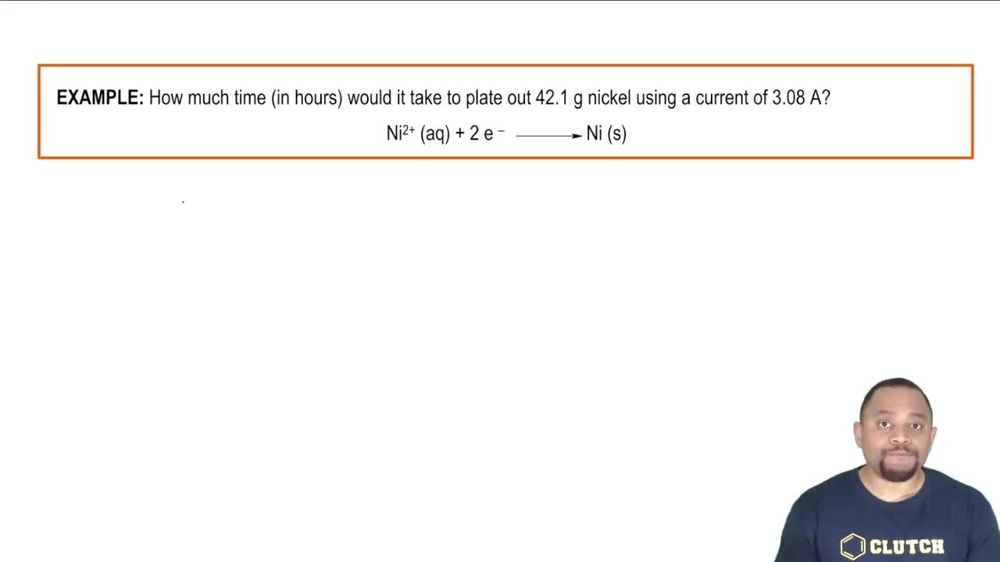
Electroplating
 00:54
00:54

Practice this topic
- Multiple Choice
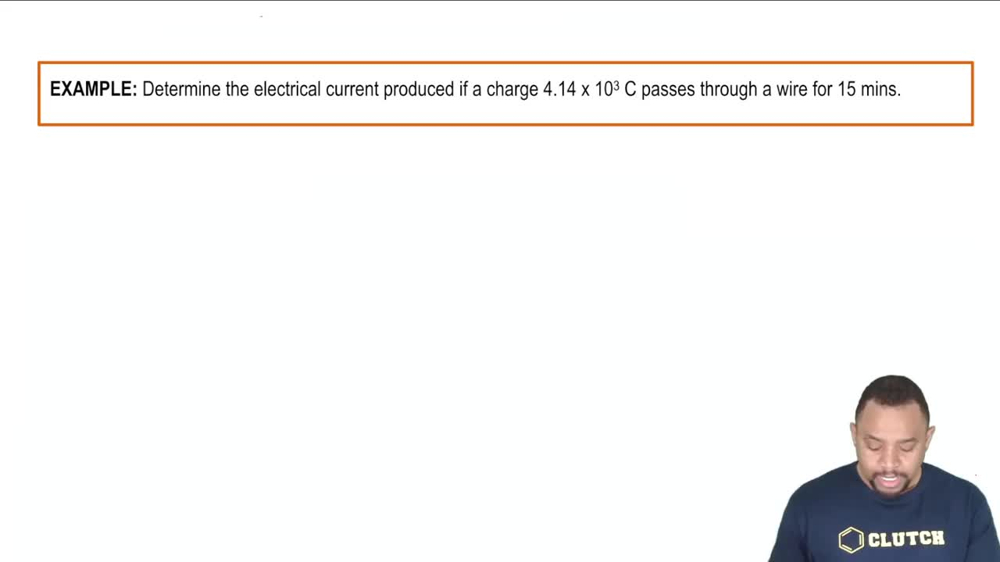
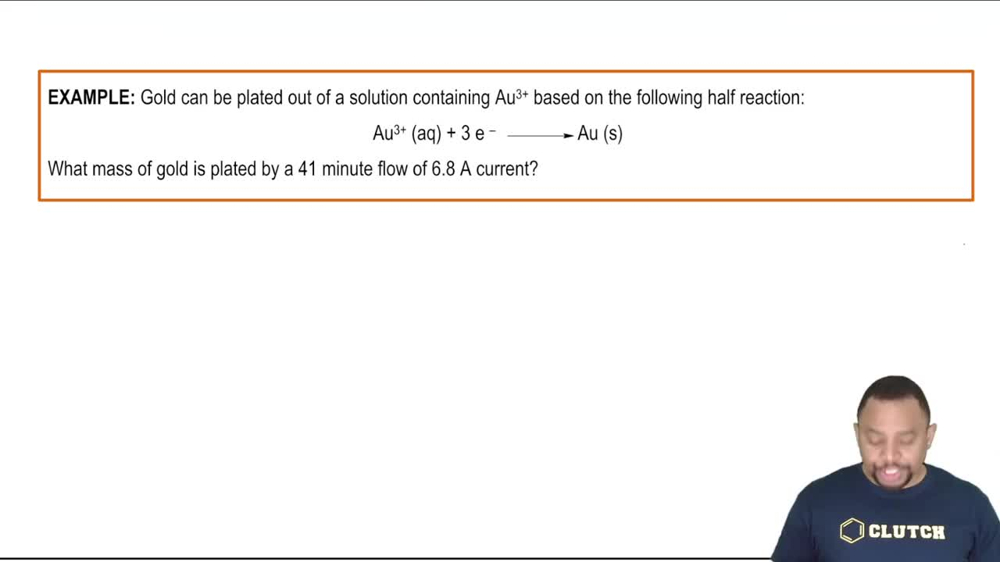
Cu2+ is reduced to Cu(s) at an electrode. If a current of 1.25 A is passed for 72 hours, what mass of copper is deposited at the electrode? (MW of Cu: 63.55 g/mol)
1166views1comments - Multiple Choice
A solution of Mn+5 is used to plate out Mn in an electrochemical cell. If a total of 1.13 g of Mn is plated out in a total time of 1600 seconds, what was the electrical current used? (MW of Mn is 54.94 g/mol)
1077views - Textbook QuestionWhat are the products of the overall reaction in the elec-trolysis of an aqueous solution of sodium hydroxide? (Refer to Table 19.1 for standard reduction potentials.)(a) Na(s) and O2(g)(b) H2(g) and O2(g)(c) Na(s) and H2(g) (d) Na(s) and H2O2(aq)294views
- Textbook Question
During the discharge of an alkaline battery, 4.50 g of Zn is consumed at the anode of the battery. (b) How many coulombs of electrical charge are transferred from Zn to MnO2?
776views1rank - Textbook Question
Li-ion batteries used in automobiles typically use a LiMn2O4 cathode in place of the LiCoO2 cathode found in most Li-ion batteries. (c) In a battery that uses a LiCoO2 cathode, approximately 50% of the lithium migrates from the cathode to the anode on charging. In a battery that uses a LiMn2O4 cathode, what fraction of the lithium in LiMn2O4 would need to migrate out of the cathode to deliver the same amount of lithium to the graphite anode?
415views - Textbook Question
Li-ion batteries used in automobiles typically use a LiMn2O4 cathode in place of the LiCoO2 cathode found in most Li-ion batteries. (b) Which material has a higher percentage of lithium? Does this help to explain why batteries made with LiMn2O4 cathodes deliver less power on discharging?
346views - Multiple ChoiceWhat mass of Cu(s) is electroplated by running 13.5 A of current through a Cu²⁺(aq) solution for 4.00 hours?756views
- Multiple ChoiceWhich factor primarily determines the thickness of the metal coating deposited during an electroplating process?75views