
Cell membrane damage causes death because a. the cell undergoes osmotic lysis. b. cell contents leak out. c. the cell plasmolyzes. d. the cell lacks a wall. e. None of the above is correct.
Verified step by step guidance
1
Understand the role of the cell membrane: The cell membrane is crucial for maintaining the integrity and homeostasis of the cell by controlling the movement of substances in and out of the cell.
Consider the effects of cell membrane damage: Damage to the cell membrane can disrupt its ability to regulate the internal environment, leading to potential cell death.
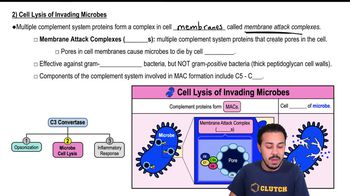
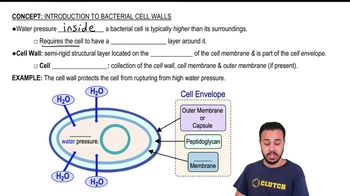
Evaluate option a: Osmotic lysis occurs when a cell bursts due to an influx of water, which can happen if the cell membrane is compromised and cannot regulate osmotic pressure.
Evaluate option b: If the cell membrane is damaged, cell contents can leak out, leading to loss of essential molecules and ions, which can be detrimental to cell survival.
Evaluate option c: Plasmolysis is the process where the cell membrane pulls away from the cell wall due to water loss, typically in plant cells, and is not directly caused by membrane damage.
Verified video answer for a similar problem:
This video solution was recommended by our tutors as helpful for the problem above
Video duration:
1m
Play a video:
Was this helpful?
Key Concepts
Here are the essential concepts you must grasp in order to answer the question correctly.
Osmotic Lysis
Osmotic lysis occurs when a cell takes in water due to a difference in solute concentration across its membrane, leading to swelling and eventual rupture. This process is particularly relevant in cells without a rigid cell wall, as the internal pressure can exceed the membrane's capacity to contain it, resulting in cell death.
Plasmolysis is the process where a cell loses water in a hypertonic environment, causing the cell membrane to pull away from the cell wall. This can lead to cell shrinkage and dysfunction, but it is distinct from lysis, as it does not involve rupture of the cell membrane.
The integrity of the cell membrane is crucial for maintaining homeostasis within the cell. Damage to the membrane can lead to leakage of essential cellular components, loss of ion gradients, and ultimately cell death, as the membrane serves as a barrier to protect the internal environment from external changes.