Select the false statement about normal microbiota. a. They compete with pathogens. b. They do not include potential pathogens. c. They make vitamins for the host. d. They train the immune system. e. A disruption in their balance can lead to disease.
Verified step by step guidance
1
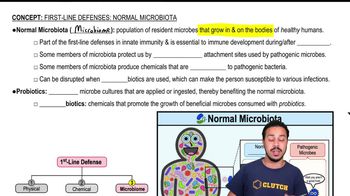
Step 1: Understand the concept of normal microbiota, which are the microorganisms that naturally reside on and within the human body without causing disease under normal conditions.
Step 2: Analyze each statement individually to determine its truthfulness based on microbiology principles:
Step 3: For statement (a), recall that normal microbiota compete with pathogens by occupying niches and resources, thus preventing pathogen colonization—this is true.
Step 4: For statement (b), consider that normal microbiota can include potential pathogens that are normally harmless but may cause disease if the balance is disrupted—this suggests the statement is false.
Step 5: For statements (c), (d), and (e), recognize that normal microbiota contribute to vitamin production, help train the immune system, and that disruption in their balance can lead to disease, so these are true.
Verified video answer for a similar problem:
This video solution was recommended by our tutors as helpful for the problem above
Video duration:
4m
Play a video:
Was this helpful?
Key Concepts
Here are the essential concepts you must grasp in order to answer the question correctly.
Normal Microbiota and Their Role
Normal microbiota are the community of microorganisms that naturally reside on and within the human body. They play essential roles such as competing with harmful pathogens for resources and space, thereby preventing infections. Understanding their beneficial functions is key to recognizing their importance in health.
Normal microbiota can include opportunistic pathogens—microbes that are usually harmless but can cause disease if the host’s defenses are compromised. This means that not all members of the normal microbiota are strictly non-pathogenic, highlighting the complexity of host-microbe interactions.
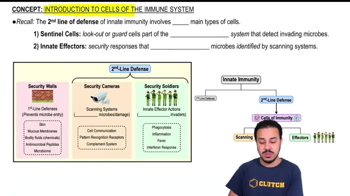
Normal microbiota contribute to the development and training of the host’s immune system, helping it distinguish between harmful and harmless agents. Disruptions in their balance, such as through antibiotics or illness, can lead to dysbiosis, increasing susceptibility to infections and other diseases.