Feedback inhibition differs from repression because feedback inhibition a. Is less precise. b. Is slower acting. c. Stops the action of preexisting enzymes. d. Stops the synthesis of new enzymes. e. All of the above
Verified step by step guidance
1
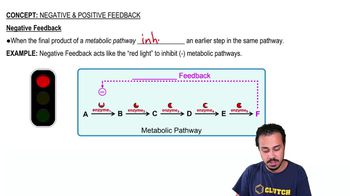
Understand the concept of feedback inhibition: it is a regulatory mechanism where the end product of a metabolic pathway directly inhibits an enzyme involved earlier in the pathway, usually by binding to the enzyme and altering its activity.
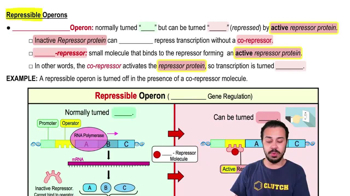
Understand the concept of repression: it is a regulatory mechanism that controls gene expression by preventing the synthesis of enzymes, typically by inhibiting transcription of the genes encoding those enzymes.
Compare the two mechanisms: feedback inhibition acts on enzymes that are already present (preexisting enzymes), quickly stopping their activity, whereas repression prevents the production of new enzymes by stopping gene expression.
Analyze the options given: option (c) states that feedback inhibition stops the action of preexisting enzymes, which aligns with the definition of feedback inhibition; option (d) refers to stopping synthesis of new enzymes, which is characteristic of repression.
Conclude that feedback inhibition differs from repression primarily because it acts faster by inhibiting enzyme activity directly rather than controlling enzyme synthesis, so the correct distinguishing feature is that feedback inhibition stops the action of preexisting enzymes.
Verified video answer for a similar problem:
This video solution was recommended by our tutors as helpful for the problem above.
Video duration:
1m
Play a video:
0 Comments
Key Concepts
Here are the essential concepts you must grasp in order to answer the question correctly.
Feedback Inhibition
Feedback inhibition is a regulatory mechanism where the end product of a metabolic pathway binds to an enzyme involved earlier in the pathway, inhibiting its activity. This process quickly stops the function of existing enzymes to prevent overproduction of the product, allowing rapid response to cellular needs.
Repression is a gene-level control mechanism that decreases or stops the synthesis of enzymes by inhibiting transcription. It acts more slowly than feedback inhibition because it prevents the production of new enzymes rather than affecting enzymes already present.
Differences Between Feedback Inhibition and Repression
The key difference is that feedback inhibition acts directly and rapidly on existing enzymes to halt their activity, while repression controls enzyme levels by regulating gene expression, which is slower. Feedback inhibition is more precise in immediate response, whereas repression affects enzyme synthesis over time.

 1:56 minutes
 Verified step by step guidance
 02:41
02:41