Which of the following would most directly reduce fever? Select all that apply. a. Limiting the number of circulating white blood cells b. Reducing eicosanoid production c. Inhibiting pyrogenic cytokines d. Stimulating the action of prostaglandins e. Administering antihistamines
Verified step by step guidance
1
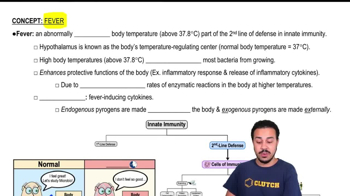
Step 1: Understand the biological basis of fever. Fever is primarily caused by the action of pyrogenic cytokines (such as IL-1, IL-6, and TNF-alpha) that stimulate the production of prostaglandins, especially prostaglandin E2 (PGE2), in the hypothalamus, which raises the body's temperature set point.
Step 2: Analyze each option in terms of its effect on fever. For example, limiting white blood cells (option a) affects immune response but does not directly reduce fever.
Step 3: Recognize that reducing eicosanoid production (option b) would decrease prostaglandin synthesis because prostaglandins are a type of eicosanoid, thus potentially lowering fever.
Step 4: Understand that inhibiting pyrogenic cytokines (option c) would prevent the initial signaling that leads to prostaglandin production and fever development, directly reducing fever.
Step 5: Note that stimulating prostaglandins (option d) would likely increase fever, and administering antihistamines (option e) mainly affects allergic responses rather than fever, so these are less likely to reduce fever.
Verified video answer for a similar problem:
This video solution was recommended by our tutors as helpful for the problem above
Video duration:
3m
Play a video:
Was this helpful?
Key Concepts
Here are the essential concepts you must grasp in order to answer the question correctly.
Role of Pyrogenic Cytokines in Fever
Pyrogenic cytokines, such as interleukin-1 and tumor necrosis factor, trigger the hypothalamus to raise body temperature, causing fever. Inhibiting these cytokines can directly reduce fever by preventing the signaling that induces the fever response.
Eicosanoids and Prostaglandins in Fever Regulation
Eicosanoids, including prostaglandins like PGE2, mediate inflammation and fever by acting on the hypothalamus to increase body temperature. Reducing eicosanoid or prostaglandin production lowers fever, while stimulating prostaglandins promotes fever.
Function of Antihistamines and White Blood Cells in Fever
Antihistamines block histamine receptors, mainly reducing allergy symptoms but have limited direct effect on fever. White blood cells fight infection but limiting their number does not directly reduce fever; fever is primarily controlled by cytokines and prostaglandins.