
What type of bond holds the following atoms together? a. Li+ and Cl- in LiCl b. Carbon and oxygen atoms in methanol c. Oxygen atoms in O2 d. A hydrogen atom of one nucleotide to a nitrogen or oxygen atom of another nucleotide in:
Verified step by step guidance
1
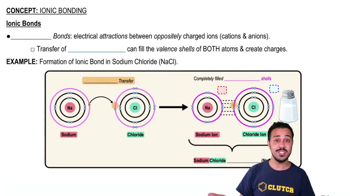
Identify the nature of the atoms involved and their tendency to lose or gain electrons. For example, Li (lithium) is a metal that tends to lose an electron, and Cl (chlorine) is a nonmetal that tends to gain an electron.
Recall that when a metal and a nonmetal interact, the bond formed is typically ionic due to the transfer of electrons, resulting in positively and negatively charged ions attracting each other.
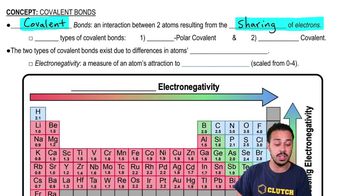
For bonds between carbon and oxygen atoms in methanol (a molecule with covalent bonds), recognize that these atoms share electrons rather than transfer them, indicating a covalent bond.
For bonds between two oxygen atoms in O₂, understand that these are nonpolar covalent bonds because the atoms are identical and share electrons equally.
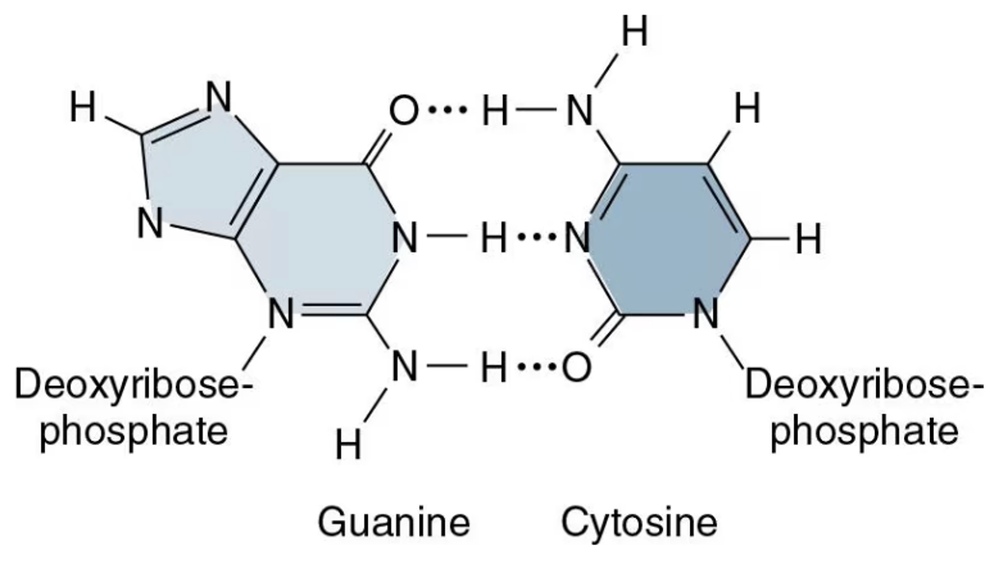
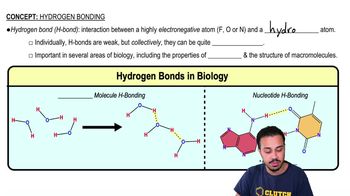
For the bond between a hydrogen atom of one nucleotide and a nitrogen or oxygen atom of another nucleotide, identify this as a hydrogen bond, which is a type of weak intermolecular attraction important in stabilizing nucleotide structures.
Verified video answer for a similar problem:
This video solution was recommended by our tutors as helpful for the problem above
Play a video:
Was this helpful?
Key Concepts
Here are the essential concepts you must grasp in order to answer the question correctly.
Ionic Bonds
Ionic bonds form when atoms transfer electrons, resulting in positively and negatively charged ions that attract each other. For example, in LiCl, lithium loses an electron to become Li⁺, and chlorine gains an electron to become Cl⁻, creating a strong electrostatic attraction between them.
Covalent bonds occur when atoms share pairs of electrons to achieve stable electron configurations. In molecules like methanol, carbon and oxygen atoms share electrons, forming strong covalent bonds that hold the molecule together.
Hydrogen bonds are weak attractions between a hydrogen atom covalently bonded to an electronegative atom (like nitrogen or oxygen) and another electronegative atom. In nucleotides, these bonds stabilize the structure by linking complementary bases across strands.