Ch. 7 - Fundamentals of Microbial Growth
Norman-McKay- Microbiology: Basic and Clinical Principles 2nd Edition
Norman-McKay2nd EditionMicrobiology: Basic and Clinical PrinciplesISBN: 9780137661619Not the one you use?Change textbook
Chapter 7, Problem 16

You are collecting a sample from a deep wound for analysis by the clinical microbiology lab. Which of the following is not a consideration as you undertake this process?
a. Avoiding the skin as the wound is swabbed
b. Using an anaerobic culture tube
c. Disinfecting the tube before collecting the sample
d. Washing your hands before and after sample collection
e. Using complex media

Verified step by step guidance
1
Step 1: Understand the goal of collecting a wound sample, which is to obtain a specimen that accurately represents the infection site without contamination from normal skin flora or the environment.
Step 2: Recognize that avoiding the skin as the wound is swabbed (option a) is important to prevent contamination by surface microbes that are not causing the infection.
Step 3: Using an anaerobic culture tube (option b) is necessary if anaerobic bacteria are suspected, as these bacteria require oxygen-free conditions to survive and grow.
Step 4: Washing your hands before and after sample collection (option d) is a standard infection control practice to prevent cross-contamination and protect both patient and healthcare worker.
Step 5: Consider that disinfecting the tube before collecting the sample (option c) is not a typical or necessary step because the tube should be sterile when opened; disinfecting it could introduce contaminants or compromise sterility. Also, using complex media (option e) is related to culturing but not directly a consideration during sample collection.

Verified video answer for a similar problem:
This video solution was recommended by our tutors as helpful for the problem above.
Video duration:
4m
Was this helpful?

Key Concepts

Here are the essential concepts you must grasp in order to answer the question correctly.

Aseptic Technique in Sample Collection

Aseptic technique involves procedures that prevent contamination of samples by unwanted microorganisms. This includes hand washing before and after collection, disinfecting equipment, and avoiding contact with non-target areas like skin to ensure the sample reflects the true microbial population of the wound.
Recommended video:
Guided course
02:05
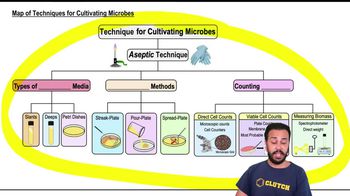
Map of Techniques for Cultivating Microbes

Anaerobic vs. Aerobic Culture Methods

Anaerobic culture tubes are used to grow bacteria that thrive in environments without oxygen, such as deep wounds. Using the correct culture method is essential to accurately identify pathogens, as some bacteria cannot survive or grow in the presence of oxygen.
Recommended video:
Guided course
05:36
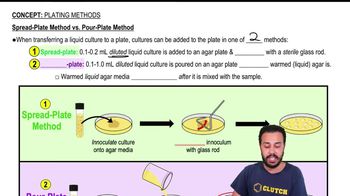
Spread-Plate Method vs. Pour-Plate Method

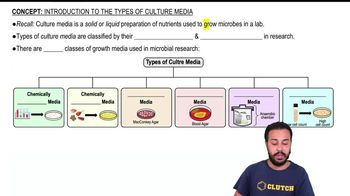
Types of Culture Media

Culture media provide nutrients for microbial growth and can be simple or complex. Complex media contain a variety of nutrients to support fastidious organisms, but the choice depends on the suspected pathogens and the purpose of the test; not all samples require complex media.
Recommended video:
Guided course
02:42
Introduction to the Types of Culture Media