Why are relatively large animals such as parasitic worms studied in microbiology?
Verified step by step guidance
1
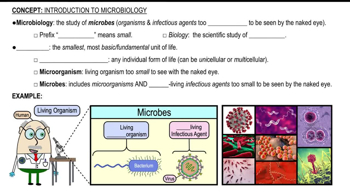
Microbiology traditionally focuses on organisms that are microscopic, but it also includes the study of larger organisms like parasitic worms due to their interactions with microorganisms and their impact on human health.
Parasitic worms, or helminths, are studied in microbiology because they often have complex life cycles that involve microscopic stages, such as eggs or larvae, which are crucial for diagnosis and understanding their transmission.
These organisms can cause significant diseases in humans and animals, and understanding their biology helps in developing treatments and preventive measures.
Studying parasitic worms in microbiology also involves understanding their symbiotic relationships with bacteria and other microorganisms, which can affect their pathogenicity and the host's immune response.
Research on parasitic worms contributes to the broader field of infectious diseases, which is a key area of study in microbiology, as it helps in understanding how these organisms spread, infect hosts, and can be controlled or eradicated.
Verified video answer for a similar problem:
This video solution was recommended by our tutors as helpful for the problem above
Video duration:
2m
Play a video:
Was this helpful?
Key Concepts
Here are the essential concepts you must grasp in order to answer the question correctly.
Parasitology
Parasitology is the study of parasites, organisms that live on or in a host and benefit at the host's expense. This field encompasses a variety of organisms, including protozoa, helminths (worms), and ectoparasites. Understanding parasitology is crucial in microbiology as it helps elucidate the complex interactions between parasites and their hosts, including disease mechanisms and transmission pathways.
Host-Pathogen Interactions
Host-pathogen interactions refer to the dynamic relationships between a host organism and the pathogens that infect it. This concept is essential in microbiology as it explores how parasites, including large organisms like worms, evade the host's immune system, establish infection, and cause disease. Studying these interactions provides insights into disease prevention and treatment strategies.
Parasites, including large parasitic worms, play significant roles in ecosystems by influencing host populations and community dynamics. Their presence can affect biodiversity, nutrient cycling, and the health of ecosystems. Understanding the ecological impact of these organisms is vital for comprehending their role in microbiology and their implications for public health and environmental management.