Use the following choices to answer the question: a. Catabolite repression b. DNA polymerase c. Induction d. Repression e. Translation
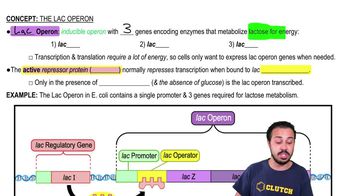
The mechanism by which lactose controls the lac operon.
Verified step by step guidance
1
Step 1: Understand the lac operon system, which is a set of genes involved in the metabolism of lactose in bacteria such as Escherichia coli.
Step 2: Recognize that the lac operon is regulated by the presence or absence of lactose, which acts as an inducer molecule.
Step 3: Identify that when lactose is present, it binds to the repressor protein, causing a conformational change that prevents the repressor from binding to the operator region of the operon.
Step 4: This removal of the repressor from the operator allows RNA polymerase to transcribe the genes needed for lactose metabolism, a process known as induction.
Step 5: Therefore, the mechanism by which lactose controls the lac operon is best described by the term 'induction' from the given choices.
Verified video answer for a similar problem:
This video solution was recommended by our tutors as helpful for the problem above
Video duration:
5m
Play a video:
0 Comments
Key Concepts
Here are the essential concepts you must grasp in order to answer the question correctly.
Induction
Induction is a regulatory mechanism where the presence of a specific molecule, such as lactose, triggers the expression of certain genes. In the lac operon, lactose acts as an inducer by binding to the repressor protein, causing it to release from the operator and allowing transcription to proceed.
The lac operon is a set of genes involved in lactose metabolism in bacteria. It includes structural genes, a promoter, an operator, and a repressor gene. The operon is regulated to ensure that enzymes for lactose breakdown are produced only when lactose is available.
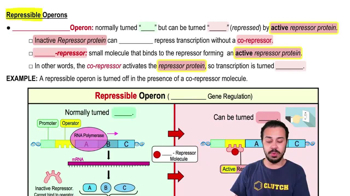
Repression is a gene regulation mechanism where a repressor protein binds to the operator region of an operon, blocking RNA polymerase and preventing transcription. In the absence of lactose, the lac repressor binds to the operator, inhibiting expression of the lac operon genes.


 5:14 minutes
 Verified step by step guidance
 02:52
02:52