
Textbook Question
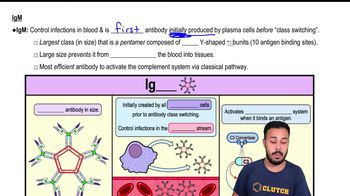
Match the following choices to the statements in questions 5–7:
a. IgA
b. IgD
c. IgE
d. IgG
e. IgM
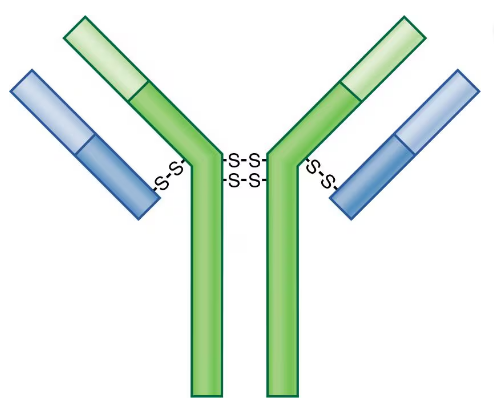
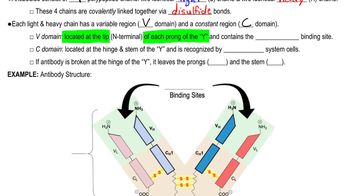
Antibodies that protect the fetus and newborn.
1717
views

 Verified step by step guidance
 05:40
05:40
 03:18
03:18Match the following choices to the statements in questions 5–7:
a. IgA
b. IgD
c. IgE
d. IgG
e. IgM
Antibodies that protect the fetus and newborn.
Match the following choices to questions 1–4:
a. Innate resistance
b. Naturally acquired active immunity
c. Naturally acquired passive immunity
d. Artificially acquired active immunity
e. Artificially acquired passive immunity
The type of protection resulting from recovery from an infection.
What does MHC stand for? What is the function of MHC? What types of T cells interact with MHC class I? With MHC class II?
Diagram the roles that T cells and B cells play in immunity.
Match the following choices to questions 1–4:
a. Innate resistance
b. Naturally acquired active immunity
c. Naturally acquired passive immunity
d. Artificially acquired active immunity
e. Artificially acquired passive immunity
A newborn’s immunity to yellow fever.
Match the following choices to questions 1–4:
a. Innate resistance
b. Naturally acquired active immunity
c. Naturally acquired passive immunity
d. Artificially acquired active immunity
e. Artificially acquired passive immunity
The type of protection resulting from recovery from an infection.