What is the difference between a physical change and a chemical change?
Verified step by step guidance
1
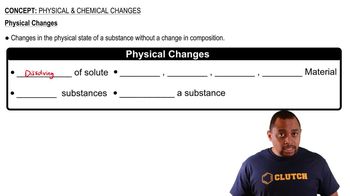
A physical change involves a change in the physical properties of a substance, such as its state (solid, liquid, gas), shape, or size, without altering its chemical composition. For example, melting ice into water is a physical change because the chemical structure of H₂O remains the same.
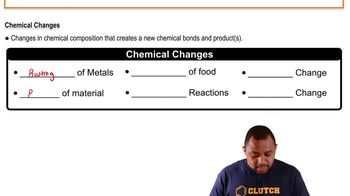
A chemical change involves a transformation that alters the chemical composition of a substance, resulting in the formation of one or more new substances. For example, burning wood is a chemical change because it produces new substances like carbon dioxide (CO₂) and water (H₂O).
To identify a physical change, look for changes that are reversible and do not produce new substances. Examples include dissolving sugar in water or breaking a piece of glass.
To identify a chemical change, look for signs such as a change in color, the production of gas (bubbles), the formation of a precipitate (solid), or the release/absorption of energy (heat, light). These indicate that a new substance has been formed.
In summary, the key difference is that physical changes do not alter the chemical identity of a substance, while chemical changes result in the formation of new substances with different chemical properties.
Verified video answer for a similar problem:
This video solution was recommended by our tutors as helpful for the problem above
Video duration:
3m
Play a video:
Was this helpful?
Key Concepts
Here are the essential concepts you must grasp in order to answer the question correctly.
Physical Change
A physical change refers to a transformation that alters the form or appearance of a substance without changing its chemical composition. Examples include changes in state, such as melting ice into water or dissolving sugar in water. These changes are usually reversible, meaning the original substance can be recovered.
A chemical change involves a process where one or more substances are transformed into different substances with distinct chemical properties. This can include reactions such as rusting iron or burning wood. Chemical changes are typically irreversible under normal conditions, as the original substances cannot be easily recovered.
Indicators of physical and chemical changes help distinguish between the two. Physical changes may involve changes in size, shape, or state, while chemical changes often produce gas, color change, or the formation of a precipitate. Recognizing these indicators is essential for identifying the type of change occurring in a substance.