Ester Reactions: Esterification describes how a carboxylic acid reacts with an alcohol in a condensation reaction to form an ester. In this process, the carboxylic acid loses its OH group and the alcohol loses an H from its oxygen, so water is removed and the two molecules become connected. An H+ catalyst is required to start the reaction.
The overall change can be written as \(RCOOH + R'OH \rightarrow RCOOR' + H_2O\) . The key structural result is the ester linkage, where a carbonyl group is bonded to an oxygen that is bonded to another carbon. Understanding which atoms are lost and how the new bond forms is central to recognizing and drawing esterification products correctly.
0
Concept
Ester Reactions: Esterification Concept 1
Video duration:
1m
Play a video:
Ester Reactions: Esterification Concept 1 Video Summary
Esterification is a chemical reaction where a carboxylic acid reacts with an alcohol to form an ester through a condensation process. In this reaction, two molecules combine with the elimination of water. Specifically, the hydroxyl group (–OH) from the carboxylic acid and a hydrogen atom (H) from the alcohol are removed, resulting in the formation of water (H2O).
To initiate this reaction, an H+ catalyst is necessary. This catalyst facilitates the interaction between the carboxylic acid and the alcohol. When these two reactants come into proximity, the loss of water occurs, allowing the carbon atom from the carboxylic acid to form a new bond with the oxygen atom from the alcohol. This process results in the creation of an ester linkage.
An ester is characterized by the presence of a carbonyl group (C=O) adjacent to an oxygen atom (–O) that is further connected to another carbon atom. Thus, through the esterification process, a carboxylic acid and an alcohol are transformed into an ester, showcasing the significance of condensation reactions in organic chemistry.
Study Smarter with Worksheets.
Follow along with each video using our printable worksheets
0
Example
Ester Reactions: Esterification Example 1
Video duration:
46s
Play a video:
Ester Reactions: Esterification Example 1 Video Summary
When butanoic acid reacts with 2-propanol, an ester is formed through a process known as esterification, which is a type of condensation reaction. In this reaction, a molecule of water is eliminated as the hydroxyl group (–OH) from the carboxylic acid (butanoic acid) and a hydrogen atom (H) from the alcohol (2-propanol) combine to form water (H₂O).
The remaining parts of the molecules then bond together, resulting in the formation of an ester linkage. The specific ester produced from this reaction is butyl propanoate. The structure of butyl propanoate can be represented as follows:
\[
\text{Butyl propanoate: } \text{C}_3\text{H}_7\text{COO}\text{C}_3\text{H}_7
\]
In summary, the reaction between butanoic acid and 2-propanol yields butyl propanoate and water, showcasing the key characteristics of esterification reactions, including the formation of an ester group and the release of water.
0
Problem
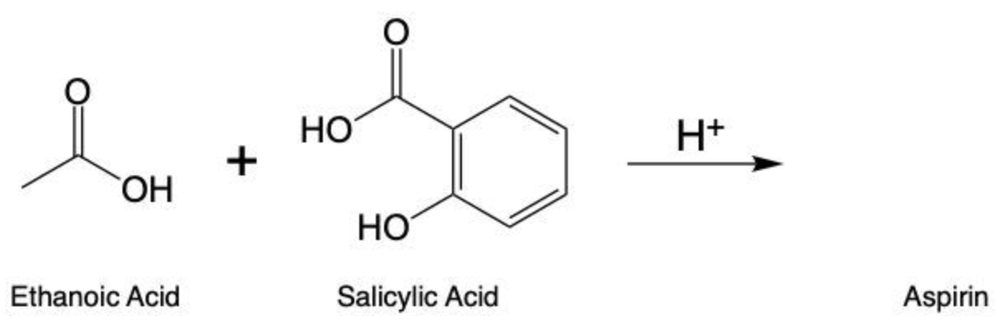
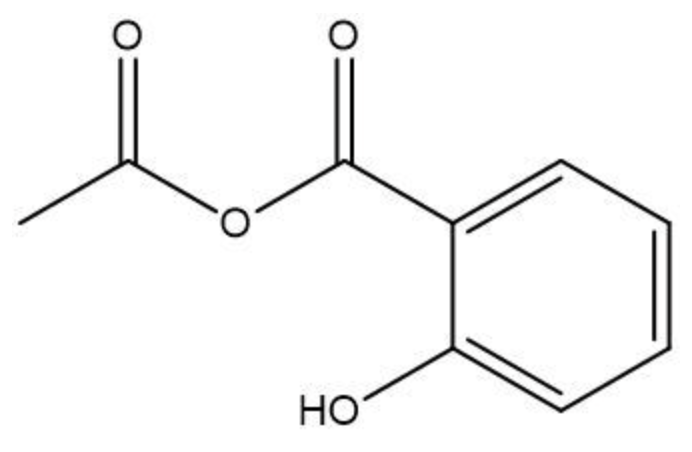
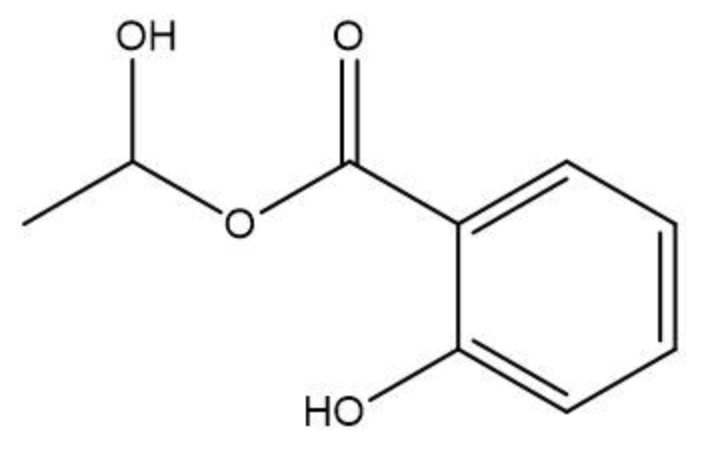
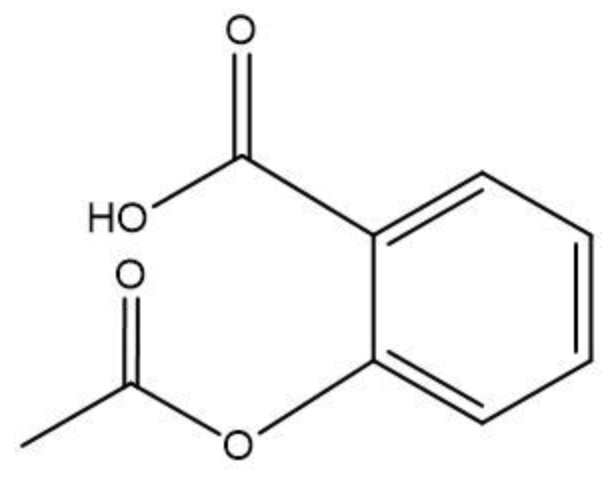
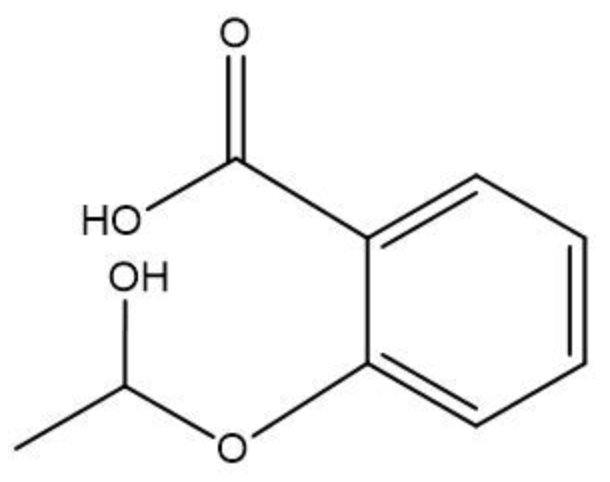
Aspirin also known as acetylsalicylic acid possesses an ester group that is formed from the reaction between ethanoic acid and salicylic acid. Determine the structure of aspirin after the condensation between ethanoic acid and salicylic acid.
The H+ catalyst plays a crucial role in esterification by initiating the reaction between a carboxylic acid and an alcohol. It protonates the carbonyl oxygen of the carboxylic acid, increasing the electrophilicity of the carbonyl carbon. This makes the carbon more susceptible to nucleophilic attack by the alcohol's oxygen. The catalyst also facilitates the removal of water by helping the hydroxyl group (OH) from the acid and the hydrogen (H) from the alcohol combine to form water. Without the H+ catalyst, the reaction would proceed very slowly or not at all under normal conditions. Thus, the catalyst speeds up the condensation process, enabling the formation of the ester linkage efficiently.
During esterification, the ester linkage forms when the carboxylic acid and alcohol combine through a condensation reaction. The carboxylic acid loses its hydroxyl group (OH), and the alcohol loses a hydrogen atom (H) from its oxygen. These two parts combine to form water (). The remaining oxygen from the alcohol then bonds to the carbonyl carbon of the acid, creating the ester functional group. This ester linkage is characterized by a carbonyl group () connected to an oxygen atom, which is further bonded to a carbon atom from the alcohol. The general structure is , where R and R' represent organic groups.
In the esterification reaction, water () is eliminated as a byproduct. This occurs because the carboxylic acid loses its hydroxyl group (OH), and the alcohol loses a hydrogen atom (H) from its oxygen. These two parts combine to form water, which is removed from the reaction mixture. The removal of water is essential because it drives the condensation reaction forward, allowing the remaining parts of the acid and alcohol to bond and form the ester linkage. This loss of water is why esterification is classified as a condensation reaction.
The general chemical equation for esterification can be written as a reaction between a carboxylic acid and an alcohol in the presence of an acid catalyst (H+): . Here, and represent organic groups. The carboxylic acid () reacts with the alcohol () to form an ester () and water (). The acid catalyst is necessary to speed up the reaction.
Esterification is considered a condensation reaction because it involves the combination of two molecules— a carboxylic acid and an alcohol— with the simultaneous elimination of a small molecule, water (). In this process, the hydroxyl group (OH) from the acid and a hydrogen atom (H) from the alcohol are removed and combine to form water. The remaining parts of the molecules then join together to form an ester. This loss of water during the formation of a larger molecule is the defining feature of condensation reactions, distinguishing them from other types of chemical reactions.