Why does the body convert NH4+ to urea for excretion?
Verified step by step guidance
1
The body generates NH₄⁺ (ammonium ion) as a byproduct of amino acid metabolism, specifically during the deamination process where the amino group (-NH₂) is removed from amino acids.
NH₄⁺ is toxic to cells, especially to the brain, even at low concentrations. Therefore, the body must convert it into a less toxic compound for safe excretion.
The liver converts NH₄⁺ into urea through the urea cycle (also known as the ornithine cycle). Urea is a neutral, water-soluble compound that is much less toxic than NH₄⁺.
The urea is then transported via the bloodstream to the kidneys, where it is filtered out and excreted in urine. This process helps maintain nitrogen balance and prevents the accumulation of toxic ammonia in the body.
This conversion to urea is an essential physiological process that ensures the safe removal of excess nitrogen from the body while protecting tissues from the harmful effects of ammonia toxicity.
Verified video answer for a similar problem:
This video solution was recommended by our tutors as helpful for the problem above
Video duration:
4m
Play a video:
Was this helpful?
Key Concepts
Here are the essential concepts you must grasp in order to answer the question correctly.
Ammonia Toxicity
Ammonia (NH₃) is a byproduct of protein metabolism and is highly toxic to cells. In its ionized form, ammonium (NH₄⁺) can disrupt cellular functions and lead to neurological damage. Therefore, the body must convert ammonia into less toxic substances for safe excretion.
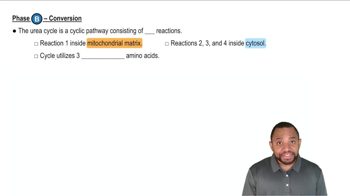
The urea cycle is a series of biochemical reactions that occur primarily in the liver, converting ammonia into urea. This process involves several enzymes and intermediates, ultimately producing urea, which is far less toxic and can be easily excreted by the kidneys in urine.
Nitrogen excretion is a crucial metabolic process for removing excess nitrogen from the body, primarily derived from amino acid breakdown. Urea serves as the main nitrogenous waste product in mammals, allowing for efficient elimination of nitrogen while conserving water compared to other forms like ammonia.