Which of the following is a cofactor and which is a coenzyme? c. NAD+
Verified step by step guidance
1
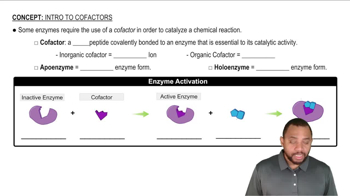
Understand the difference between a cofactor and a coenzyme: A cofactor is a non-protein chemical compound or metallic ion that is required for an enzyme's activity. Cofactors can be inorganic (e.g., metal ions like Mg²⁺ or Zn²⁺) or organic. A coenzyme, on the other hand, is a specific type of organic cofactor that is loosely bound to the enzyme and often acts as a carrier of electrons or functional groups.
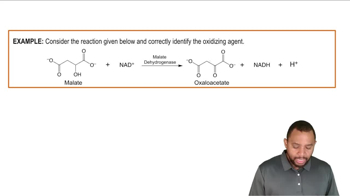
Identify the nature of NAD⁺: NAD⁺ (nicotinamide adenine dinucleotide) is an organic molecule that participates in redox reactions by accepting and donating electrons. It is derived from niacin (vitamin B3).
Determine if NAD⁺ is a cofactor or coenzyme: Since NAD⁺ is an organic molecule and functions as a carrier of electrons during enzymatic reactions, it is classified as a coenzyme.
Relate NAD⁺ to its role in metabolism: NAD⁺ is commonly involved in metabolic pathways such as glycolysis, the citric acid cycle, and oxidative phosphorylation, where it alternates between its oxidized form (NAD⁺) and reduced form (NADH).
Conclude: Based on its properties and role, NAD⁺ is a coenzyme, not a general cofactor.
Verified video answer for a similar problem:
This video solution was recommended by our tutors as helpful for the problem above
Video duration:
1m
Play a video:
Was this helpful?
Key Concepts
Here are the essential concepts you must grasp in order to answer the question correctly.
Cofactors
Cofactors are non-protein chemical compounds that assist enzymes in catalyzing reactions. They can be metal ions, such as zinc or magnesium, or organic molecules. Cofactors are essential for the activity of many enzymes, as they help stabilize enzyme-substrate complexes or participate directly in the chemical reaction.
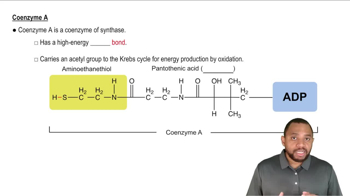
Coenzymes are a specific type of cofactor that are organic molecules, often derived from vitamins. They bind to enzymes and assist in the transfer of specific atoms or functional groups during biochemical reactions. Unlike cofactors, coenzymes are often altered during the reaction and need to be regenerated for continued enzyme activity.
NAD<sup>+</sup> (Nicotinamide adenine dinucleotide) is a coenzyme that plays a crucial role in redox reactions, acting as an electron carrier. It is derived from vitamin B3 and is essential for metabolic processes, including cellular respiration. NAD<sup>+</sup> accepts electrons during oxidation reactions, becoming NADH, which can then donate electrons in reduction reactions.