Identify each of the following as a fatty acid, soap, triacylglycerol, wax, glycerophospholipid, sphingolipid, or steroid: b. cholesterol
Verified step by step guidance
1
Step 1: Understand the question. The problem asks you to classify 'cholesterol' into one of the given categories: fatty acid, soap, triacylglycerol, wax, glycerophospholipid, sphingolipid, or steroid.
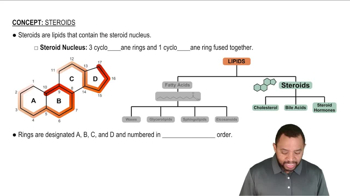
Step 2: Recall the definition of a steroid. Steroids are a class of lipids characterized by a structure consisting of four fused carbon rings (three cyclohexane rings and one cyclopentane ring). They are hydrophobic and include molecules like cholesterol, hormones, and bile salts.
Step 3: Identify the structure of cholesterol. Cholesterol is a lipid molecule with a four-ring steroid structure and a hydroxyl (-OH) group attached to one of the rings. It is a key component of cell membranes and a precursor for steroid hormones.
Step 4: Compare cholesterol's structure to the definitions of the other categories. Cholesterol does not fit the definitions of fatty acids (long hydrocarbon chains with a carboxylic acid group), soaps (salts of fatty acids), triacylglycerols (glycerol esterified with three fatty acids), waxes (esters of long-chain alcohols and fatty acids), glycerophospholipids (glycerol backbone with two fatty acids and a phosphate group), or sphingolipids (lipids with a sphingosine backbone).
Step 5: Conclude that cholesterol is classified as a steroid based on its structure and properties.
Verified video answer for a similar problem:
This video solution was recommended by our tutors as helpful for the problem above
Video duration:
3m
Play a video:
Was this helpful?
Key Concepts
Here are the essential concepts you must grasp in order to answer the question correctly.
Steroids
Steroids are a class of lipids characterized by a structure of four fused carbon rings. They play various roles in biological systems, including serving as hormones (like testosterone and estrogen) and components of cell membranes. Cholesterol, specifically, is a type of steroid that is crucial for maintaining membrane fluidity and serves as a precursor for the synthesis of other steroids.
Cholesterol is a specific type of steroid that is essential for the formation of cell membranes and the synthesis of steroid hormones and bile acids. It is produced in the liver and can also be obtained from dietary sources. While necessary for various bodily functions, high levels of cholesterol can lead to health issues, such as cardiovascular disease.
Lipids are a diverse group of hydrophobic organic molecules that include fats, oils, waxes, and steroids. They can be classified into several categories based on their structure and function, such as fatty acids, triglycerides, phospholipids, and steroids. Understanding these classifications is essential for identifying specific lipids, like cholesterol, and their roles in biological systems.